What are the dominant religions in Uganda?
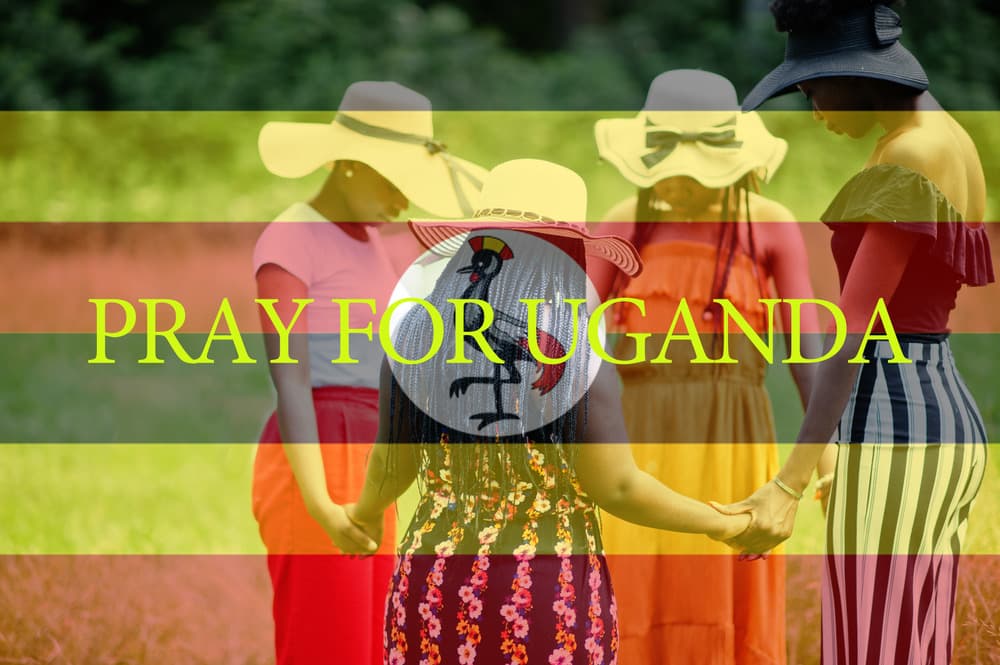
Ugandans are predominantly Christian. Many live under Catholicism, others are Anglicans and the remainder are Muslims.
Ugandans are predominantly Christian. Many live under Catholicism, others are Anglicans and the remainder are Muslims. Yet Uganda is among the countries registered with the Organisation of Islamic Cooperation. The country recognizes the right to belief of its people, so religions must be officially declared to the Ugandan government. As a result, dominant religions take the status of "trust" (a foundation), while others exist in the form of Non-Governmental Organizations.
What are the religions in Uganda?
Traditional religions
The ancestors of Ugandans had their own religion. Although it integrates African culture, only 1% of the population continues to live under these ancestral beliefs, like the Karamojong people.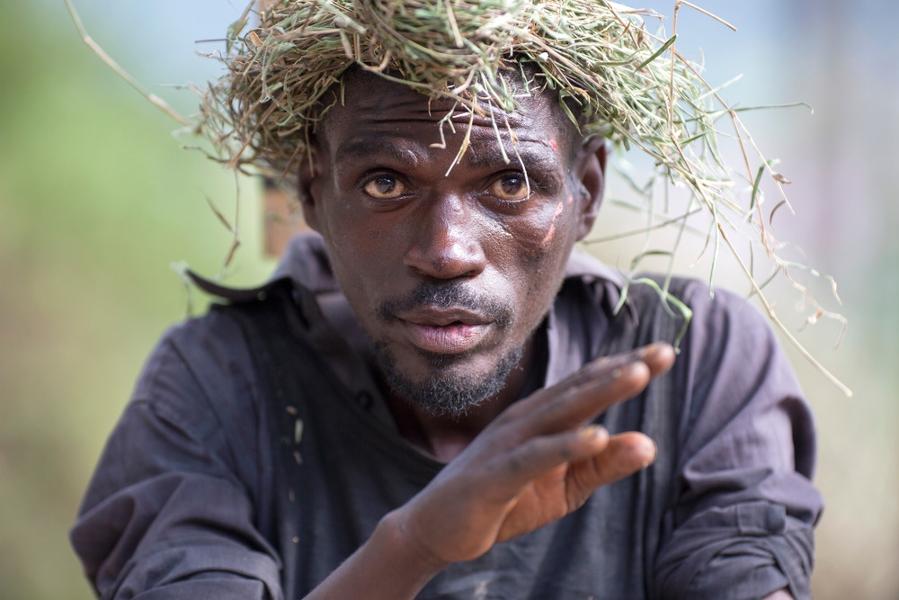
Christianity
A majority of the Ugandan population worships the Lord Jesus Christ. Whether Catholic or Anglican, Christians live their faith daily. Among these religions, there is also: "Baptism," an evangelical Christian movement.
Islam
Ugandan Muslims are also part of the believers in this country. Even though their numbers are growing, they do not yet surpass the predominance of Christians.
Hinduism
The population of Uganda has Indian origins. Thus, after Christianity and Islam, a Hindu community still persists.
Calendar of major religious celebrations in Uganda
Given that Christians and Muslims make up the largest part of Ugandans, the distribution is divided into two distinct parts. Christians are concentrated in the North-Western Nile sub-region. Muslims, on the other hand, populate the Iganga district. As a result, Christian and Muslim holidays have a place in Uganda's calendar.
Dates |
| Description | |
March 30 and 31 | Eid al-Fitr |
| Eid al-Fitr is the Muslim holiday marking the end of the Ramadan fast. It is celebrated on the first day of Shawwal (the tenth month of the Islamic calendar). |
March or April: Friday of Holy Week | Good Friday |
| "Good Friday" is a Christian holiday commemorating the crucifixion of Jesus Christ. It falls on the Friday before Easter Sunday. This day is marked by numerous religious ceremonies, prayers and processions throughout the country. |
Monday after Easter | Easter Monday |
| Christian holiday of the Resurrection. |
December 25 | Christmas Day |
| Christmas is the Christian holiday celebrating the Nativity, the celebration commemorating the birth of Jesus Christ. |
December 26 | St. Stephen's Day |
| This is a Christian holiday honoring St. Stephen, regarded as the first martyr of Christianity. He was stoned to death in 36 AD after being accused of blasphemy. This celebration takes place on December 26 and is observed by the Catholic Church. |
February 16 | Day in memory of Archbishop Janani Luwum |
| Janani Jakaliya Luwum was Archbishop of the Church of Uganda from 1974 to 1977. He was assassinated in 1977 under the regime of Idi Amin Dada (the archbishop publicly denounced the abuses and human rights violations committed by the government in power). |
June 3 | Day of Ugandan Martyrs |
| Honors 45 Christians who were martyred between 1885 and 1887. |
June 6 and 7 | Eid al-Adha |
| Festival of Sacrifice. Eid al-Adha is the most important Muslim holiday. |
Ugandan religions in numbers
Total population (2023): 47,700,000 inhabitants
Rate of Ugandan Catholics (2024): 82% (of which 39% Roman Catholics, 32% Anglicans and 11% Pentecostals)
Rate of Ugandan Muslims (2024): 13%
Rate of Ugandans of other religions (2024): 5% (including Baháʼís, Hindus, Jews, Eastern Orthodox Christians, Baptists, Seventh-day Adventists, followers of indigenous beliefs, people with no religious affiliation, etc.).
What are the most beautiful religious buildings in Uganda?
Among the most important places of worship in Uganda, do not miss:
St. Mary's Catholic Cathedral of Rubaga: located in the city of Kampala (the capital of Uganda), the building is recognizable by its façade lined with busts and stained glass windows honoring Uganda's martyrs.
The Basilica of the Martyrs of Uganda (or Namugongo Basilica): opened in 1075, this sanctuary is one of the country's most important pilgrimage sites. Entrance: 12,000 UGX (approximately €3).
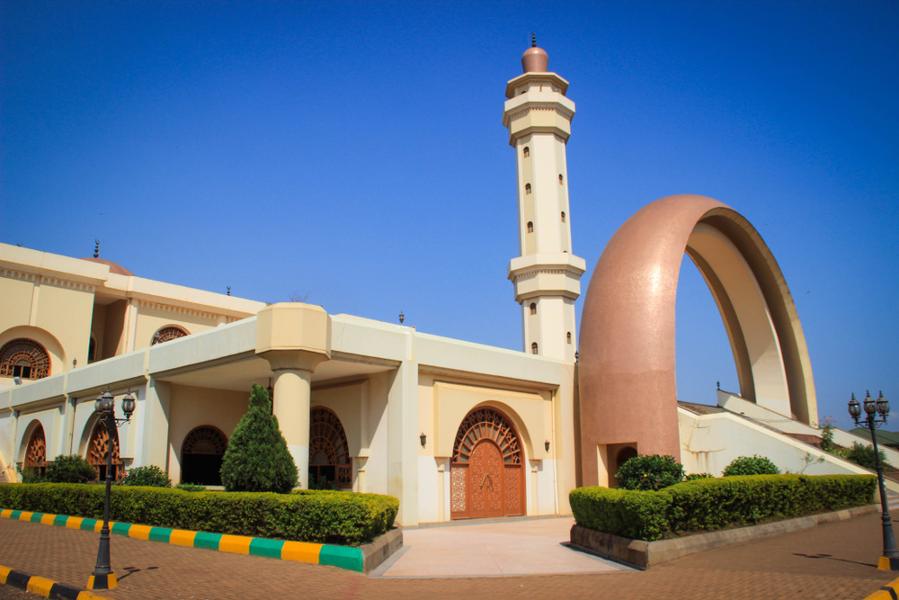
The Great Mosque of Kampala: built in the early 2000s, this religious building can accommodate up to 15,000 worshippers! It is the largest mosque in East Africa.
Frequently asked questions
What is the majority religion in Uganda?
The most widely practiced religion in Uganda is Christianity, with a majority of Catholics and Anglicans. There are also Protestants belonging to various denominations. Traditional African beliefs remain present in certain communities—often in addition to Christianity.
Is Islam important in Uganda?
Islam in Uganda is a minority religion, practiced by approximately 13% of the population. Muslims are concentrated in certain parts of the country. Although Christianity is dominant, Islam contributes to religious diversity and enjoys official recognition.
Can you visit churches and mosques in Uganda?
Yes, most religious buildings can be visited in Uganda. While most are free, some charge an entrance fee of a few shillings for non-pilgrims, such as the Namugongo sanctuary. When visiting, it is mandatory to dress appropriately, with covering clothes.
Frequently asked questions
Uganda has no official state religion. The Constitution guarantees freedom of religion and worship to all citizens. However, Christianity is by far the most practiced religion, representing approximately 82% of the population, followed by Islam with approximately 13%.
Yes, Uganda is generally considered a country where inter-religious coexistence is peaceful. Christians and Muslims often share the same neighborhoods and sometimes celebrate each other's holidays. The state officially recognizes different religions and public holidays include both Christian and Muslim festivals.
The main religious holidays in Uganda include the Day of Ugandan Martyrs (June 3), Eid al-Fitr, Eid al-Adha, Christmas (December 25) and Easter Monday. The Namugongo pilgrimage, held every June 3, attracts millions of Catholic and Anglican faithful from Africa and around the world.
Yes, freedom of worship is guaranteed in Uganda. Travelers can practice their religion freely. Churches, mosques and Hindu temples are accessible in major cities like Kampala. It is advisable to inquire about service times to avoid disrupting ceremonies.
The Great Mosque of Kampala, also called the National Mosque of Uganda, was built in the early 2000s. It can accommodate up to 15,000 worshippers and is considered the largest mosque in East Africa. It is open to non-Muslim visitors outside prayer times.