What animals can you observe in Uganda?
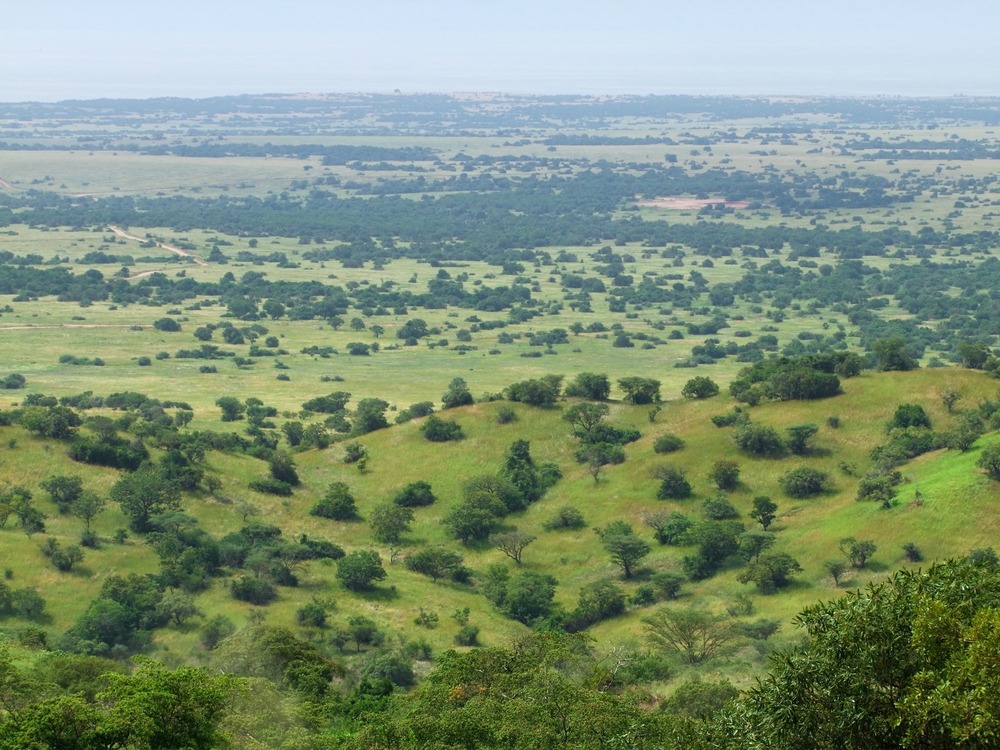
With ultra-varied landscapes and multiple ecosystems, Uganda is home to a wealth of wild animals.
With ultra-varied landscapes and multiple ecosystems, Uganda is home to a wealth of wild animals. So if you're passionate about wildlife and nature, we've prepared a list of animals you can see during a trip to Uganda. One thing is certain, the territory promises unforgettable animal encounters…
1. Mountain gorillas
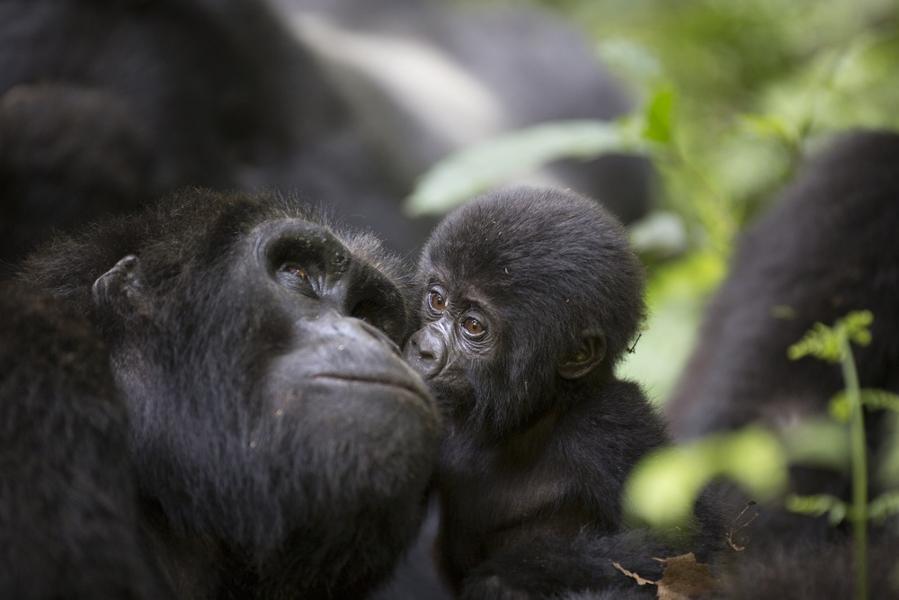
It's surely the most impressive animal you can observe in Uganda. The mountain gorilla lives in high-altitude forests, up to 4,000 m above sea level. It lives in groups of 5 to 50 individuals led by a dominant male, the famous silverback. Although they are imposing, these are shy and peaceful animals, far from the image attributed to them.
To see mountain gorillas in Uganda, you can head to the Mgahinga and Bwindi national parks. Accompanied by a guide, you'll experience a moment rich in emotions that you won't forget anytime soon…
2. Chimpanzees
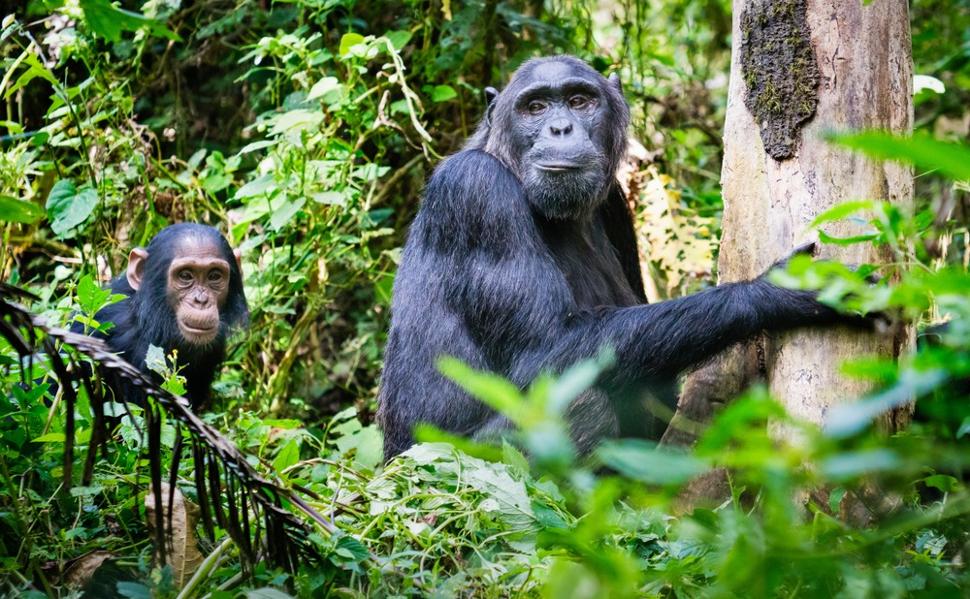
Uganda is also home to those considered to be man's closest relatives. Indeed, the country is renowned worldwide for its treks to encounter chimpanzees living in complete freedom in their natural habitat. As with gorillas, you can go trekking with a forest guide. Once contact is established, you can enjoy an hour of observation to understand their way of life. A unique experience you won't forget anytime soon!
To see chimpanzees in Uganda, you can visit the must-see Kibale National Park or the Queen Elizabeth (Kyambura Gorge), Murchison Falls national parks and the Kalinzu Forest Reserve.
3. Other primates of Uganda
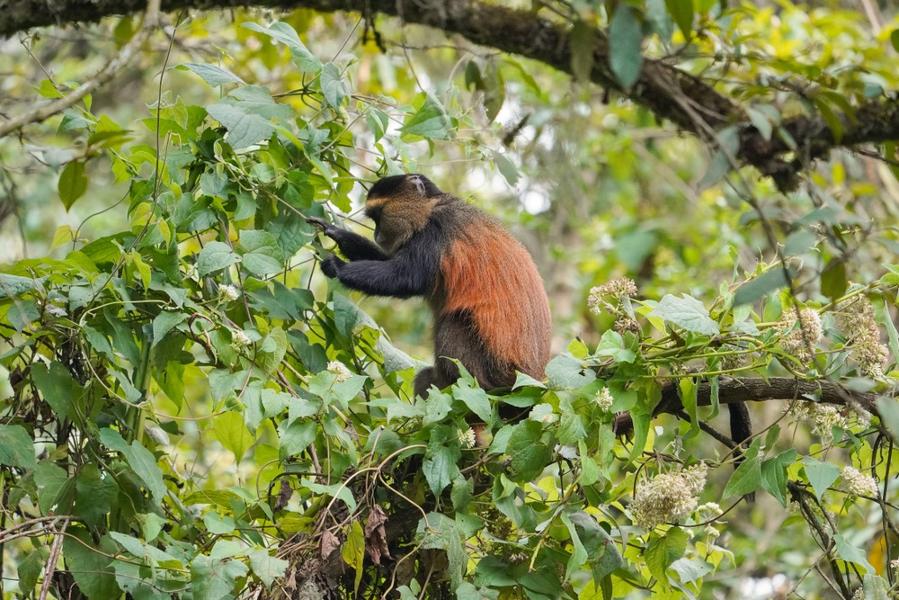
Besides mountain gorillas and chimpanzees, Uganda is home to numerous monkey species. Some are endemic to the region, such as the golden monkey (endemic to the Albertine Rift) which can be found in Mgahinga National Park.
If you're a monkey enthusiast, we recommend visiting Kibale National Park once again. Nicknamed the "primate capital of the world," it is home to one of the world's densest primate populations with 12 species recorded in addition to chimpanzees:
Anubis baboon,
Ascagne's cercopithecus,
L'Hoest's cercopithecus,
Central African colobus,
Guereza colobus,
Grey-cheeked mangabey,
Blue monkey,
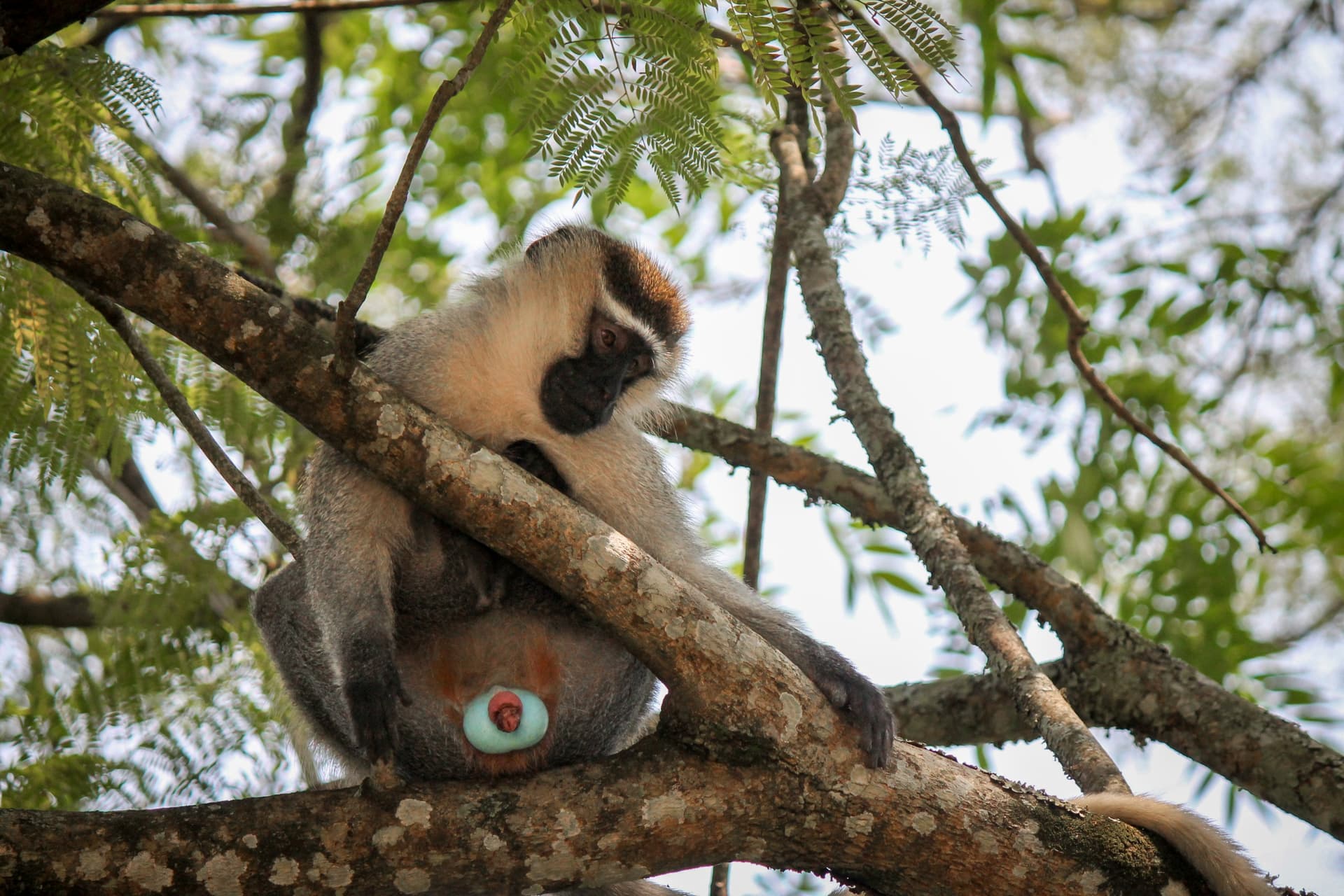
Vervet tantalus,
Spectacled galago,
Demidoff's galago,
Thomas's galago,
Potto.
For a unique experience encountering primates, request a quote for our Encounter with Uganda's primates itinerary
4. Lions and leopards
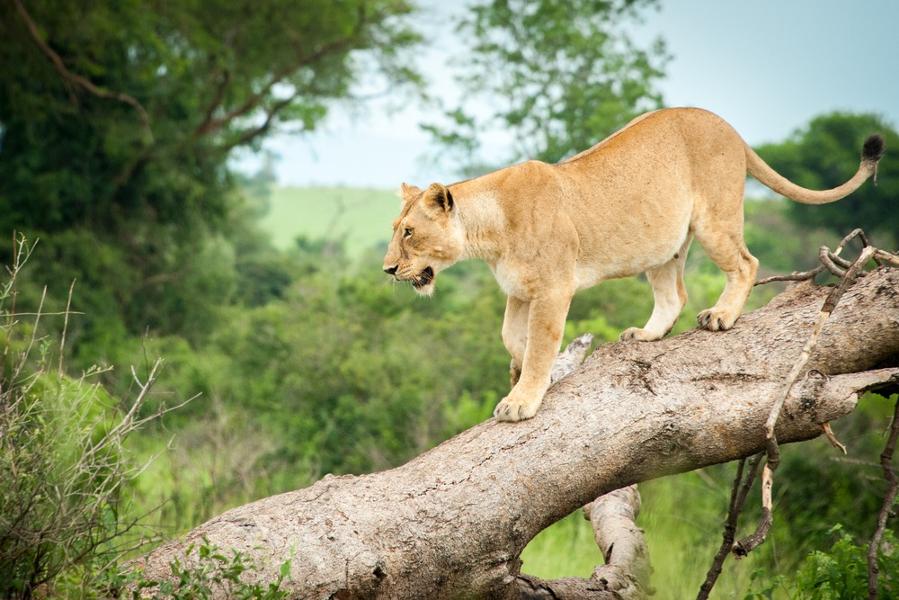
During a safari in Uganda, you can observe two types of felids: lions and leopards.
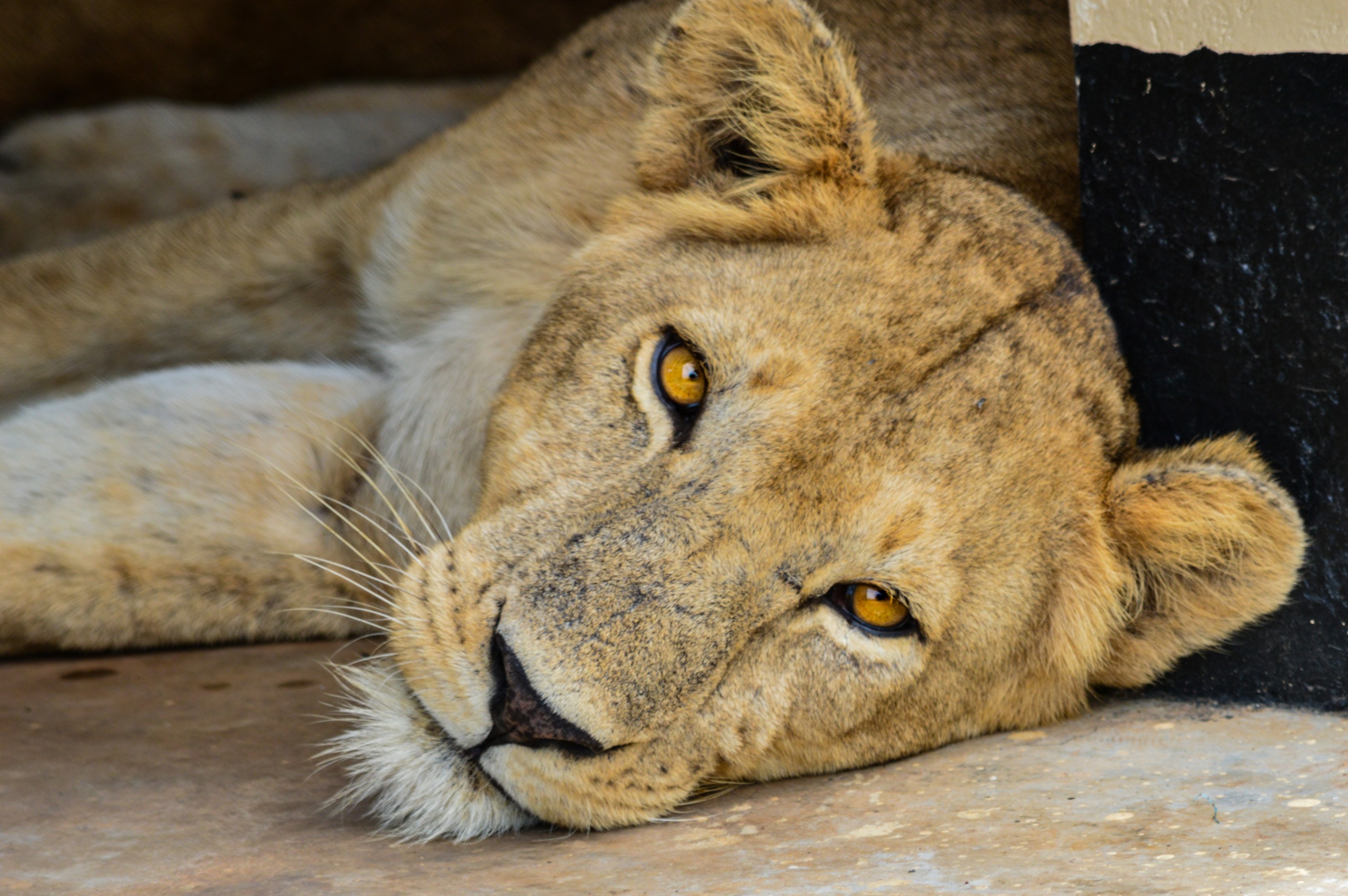
Lion populations are concentrated mainly in 3 savanna parks: Kidepo Valley National Park, Queen Elizabeth National Park and Murchison Falls National Park. It's worth noting that Uganda is one of the rare countries in the world to be home to tree-climbing lions—lions perched in trees. You can notably see them at Ishasha within Queen Elizabeth National Park.
As for leopards, you'll need a bit of luck to hope to spot them. To try to see leopards in Uganda, head to Murchison Falls, Queen Elizabeth, Kidepo Valley, Lake MBuro national parks or the Bokora Reserve.
5. The elephant
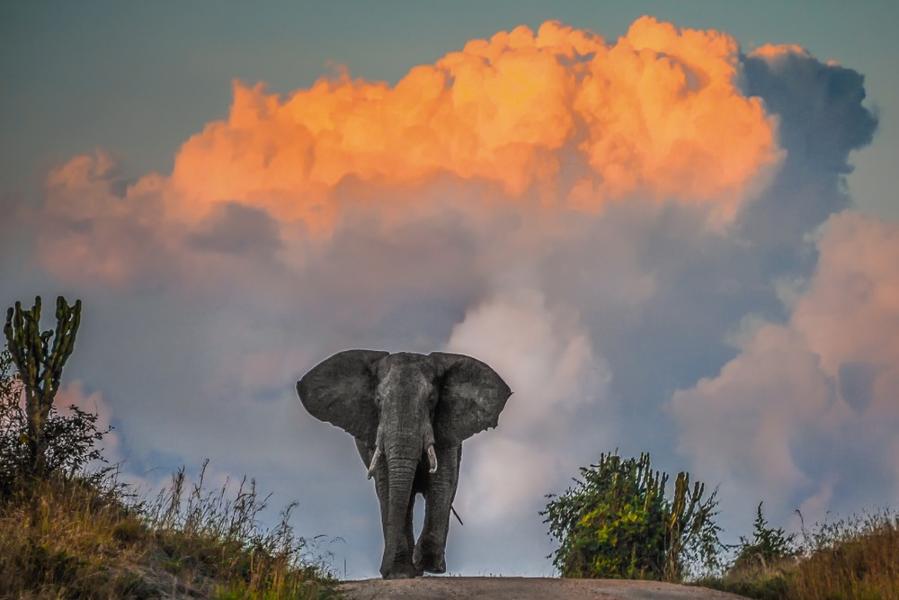
In Uganda, you can also discover the largest land animal in the world: the elephant. Weighing up to 6 tonnes, the African elephant is the most imposing. In Uganda, there are approximately 6,500 pachyderms that can be observed in savanna or forest. They are found mainly in the savannas of Queen Elizabeth, Kidepo, Semliki, Murchison Falls, Mount Elgon National Park and, in smaller numbers, in the tropical forests of Bwindi and Mgahinga.
6. Rothschild's giraffe
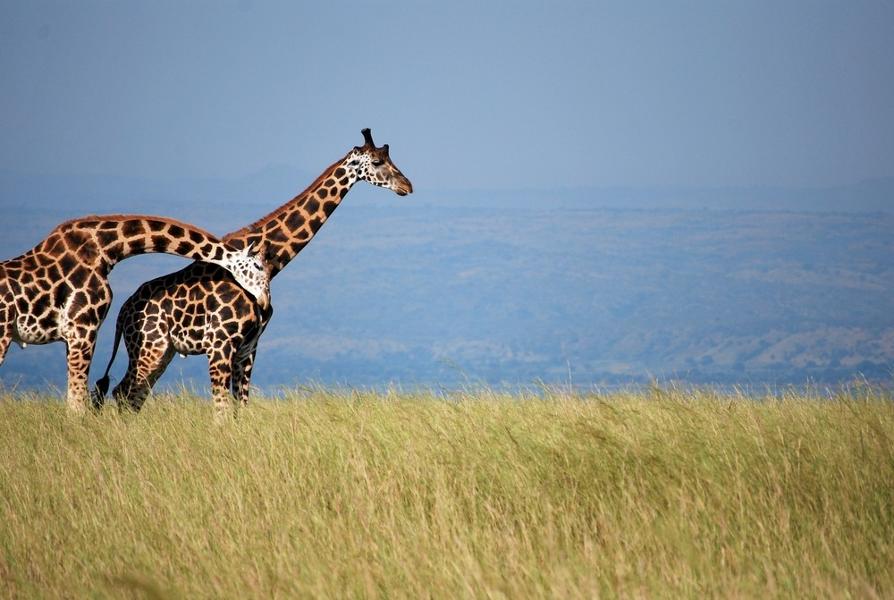
Do you love giraffes? Ugandan grasslands are home to Rothschild's giraffe. Recognizable by the light color of its legs, Rothschild's giraffe is the only giraffe species in the country. You can see them in Murchison Falls, Kidepo Valley and Lake MBuro national parks as well as in the Bokora Reserve.
7. The white rhinoceros
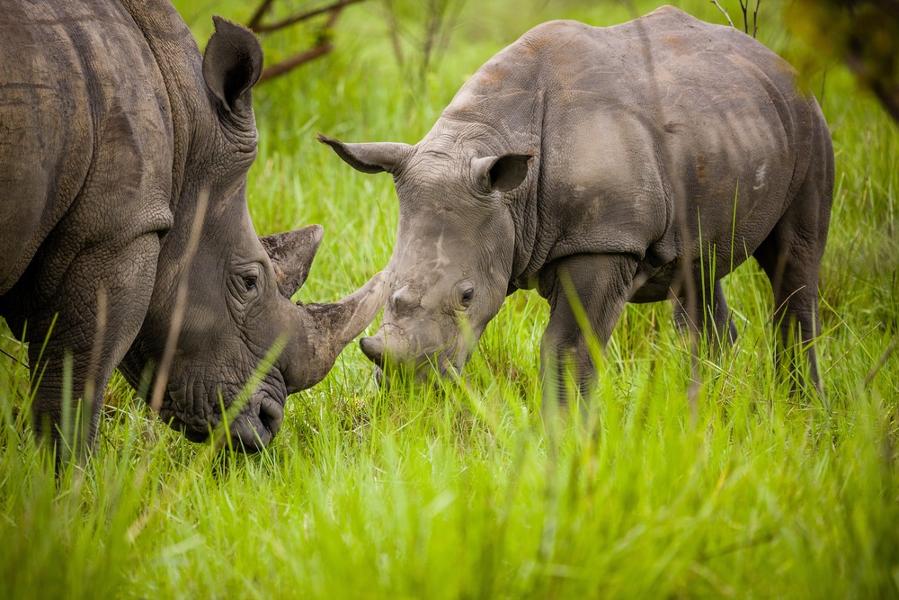
Although they disappeared due to intense poaching and habitat destruction, white rhinoceroses have been present on Ugandan territory once again for several years thanks to the reintroduction work undertaken by the NGO Rhino Fund Uganda. The latter created the Ziwa Rhino Sanctuary where white rhinoceroses from South Africa have been reintroduced from Kenya and zoos in the United States.
8. The hippopotamus
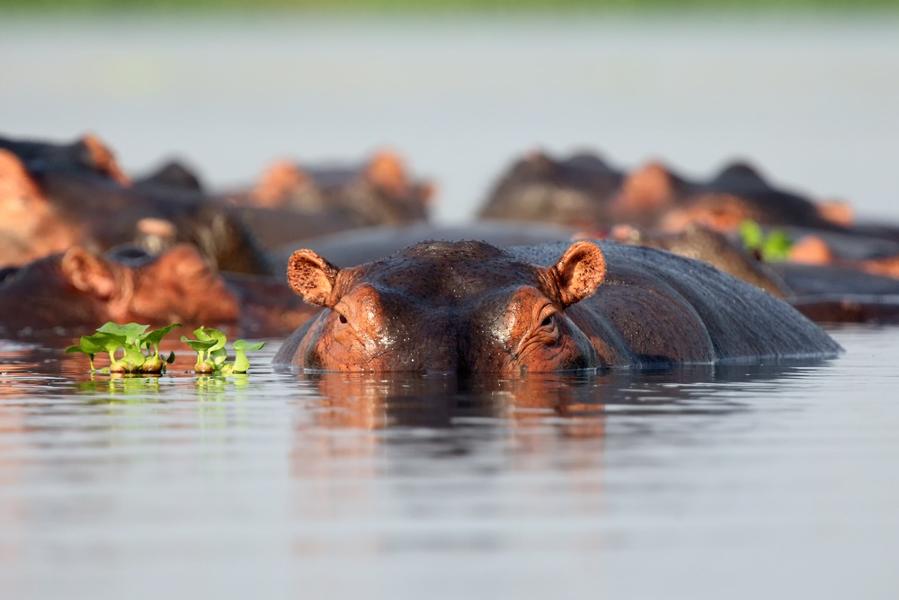
With its numerous bodies of water (marshes, lakes, canals…), Uganda is home to a large population of hippopotamuses. During an animal safari on foot, by 4x4 or better yet, by boat, you can spot them easily. They are found notably in Queen Elizabeth National Park (in the Kazinga Channel), on the Victoria Nile in Murchison Falls National Park or at Lake Mburo.
9. Uganda kob
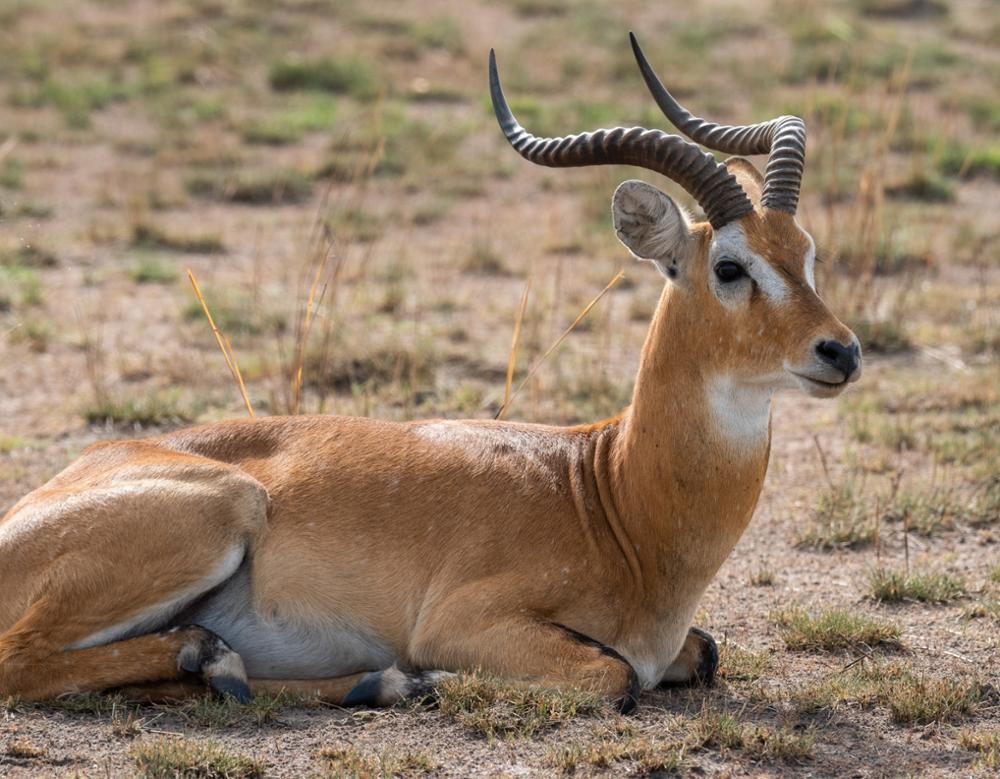
Uganda is home to about thirty antelope species. Among them, there is one unique species as it is endemic: the Uganda kob. It is a subspecies of Buffon's kob, which is characterized by a reddish and white coat on the underside of the belly, neck and around the eyes. You can observe them mainly in Murchison Falls, Queen Elizabeth, Kidepo and Semliki national parks.
10. Numerous bird species
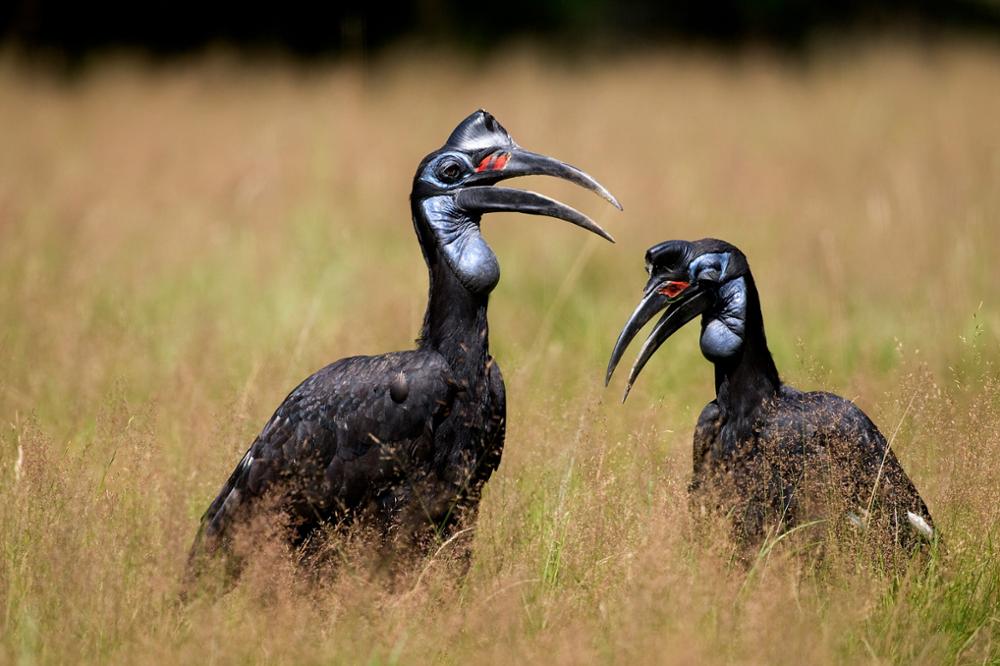
Uganda is among the world's best destinations for birdwatching. While many ornithological safaris are organized there, it's because the country boasts over 1,100 bird species. It's therefore impossible to list them all, but to give you an idea of bird species as magnificent as they are amusing, we can mention:
The crowned crane: Uganda's symbol found on the flag.
The shoebill: with its prehistoric appearance, observing it alone could justify the trip!
The African skimmer: one of the largest laridae whose size can reach 42 cm.
The scarlet bee-eater and the carmine bee-eater: these two species have plumage among the most fascinating.
The giant turaco: often considered one of Africa's most beautiful birds...
Other animals you can see in Uganda
In addition to the animals we mentioned earlier, here are other species you may encounter during your trip to Uganda:
Ourebi,
Impala,
Hylochère,
Warthog,
Topi,
Zebra,
Cape buffalo,
Cape eland,
Spotted hyena,
Crocodile,
Ostrich,
Kori bustard,
Ground hornbills,
Saddle-billed stork,
Chameleon and other reptiles,
Multiple butterflies and insects,
And many more…
Frequently asked questions
The two national parks where it is possible to observe mountain gorillas in Uganda are Bwindi Impenetrable Forest National Park and Mgahinga National Park. Bwindi is generally considered the better option as it is home to the world's largest population of mountain gorillas. A trekking permit is mandatory and must be booked in advance with the Uganda Wildlife Authority (UWA).
The mountain gorilla trekking permit in Uganda costs approximately $700 USD per person for foreign tourists. This permit allows one hour of observation with the gorilla group, accompanied by an accredited forest guide. It is highly recommended to book several months in advance as demand is very high, especially during peak season.
The best times to observe animals in Uganda correspond to the two dry seasons: June to September and December to February. During these periods, vegetation is less dense, tracks are passable and animals gather around water sources, facilitating observations. Gorilla and chimpanzee treks are however possible year-round.
Uganda does not possess all the traditional Big Five: buffalo, elephant, lion and leopard are present, but there is no wild black rhinoceros. However, thanks to the work of the NGO Rhino Fund Uganda, white rhinoceroses have been reintroduced at Ziwa Rhino Sanctuary, allowing visitors to observe this species in the country.
Lions in Uganda are found mainly in three savanna parks: Kidepo Valley National Park, Queen Elizabeth National Park and Murchison Falls National Park. Uganda is one of the rare countries in the world to be home to so-called 'tree-climbing' lions, which have the habit of climbing trees. These climbing lions are found notably in the Ishasha area, in the southern sector of Queen Elizabeth Park.
Yes, Uganda is considered one of the world's best ornithological destinations. The country boasts over 1,100 bird species, including emblematic species such as the crowned crane (national symbol), the shoebill with its prehistoric look, the carmine bee-eater or the giant turaco. Many specialized ornithological safaris are organized, notably in Kibale, Queen Elizabeth and Bwindi parks.