Where to Spot the Big Five in Uganda?
Planning a trip to Uganda and dreaming of a wildlife safari to spot the famous Big 5? You've come to the right place!
Planning a trip to Uganda and dreaming of a wildlife safari to spot the famous Big 5? You've come to the right place! We'll share all our insider tips and reveal the must-see sites for observing the Big Five animals in Uganda.
What is the Big Five?
Originally, the term Big Five was sadly associated with hunting. It refers to 5 African animals that were, for a long time, the target of trophy hunters due to their large size and difficulty in being killed on foot. The Big Five includes the African elephant, lion, leopard, African buffalo and rhinoceros.
Threatened by hunting, poaching, the ivory trade, rhinoceros horn trafficking, leopard skin trade and the destruction of natural habitats, Big Five animals were decimated on a massive scale for many years. Fortunately, these great African mammals are now protected by state conservation efforts and wildlife organizations.
While we still use the term Big Five today, it's no longer in the context of hunting but rather in the context of wildlife safaris across Africa.
Where to see lions in Uganda?
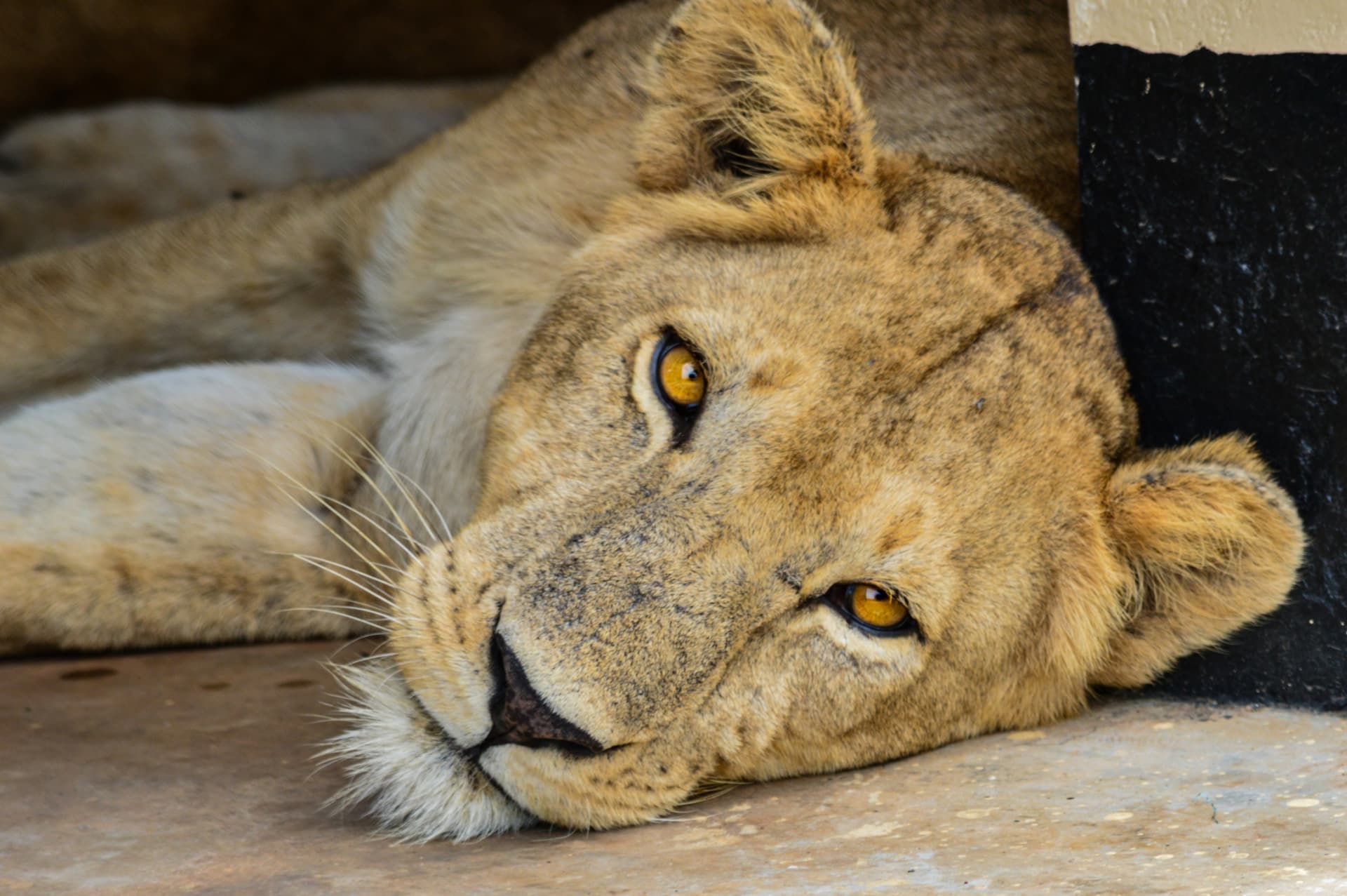
The African lion is often one of the most anticipated animals of the Big Five. This great carnivore is the most social of all felines. In Uganda, as in most African countries, it is considered the king of animals.
In Uganda, the African lion lives primarily in savannas. During a safari in Uganda, you'll be able to see lions in the country's largest savanna parks as well as in certain reserves, namely:
Murchison Falls National Park,
Queen Elizabeth National Park,
Kidepo Valley National Park,
the Bokora Reserve.
Worth knowing
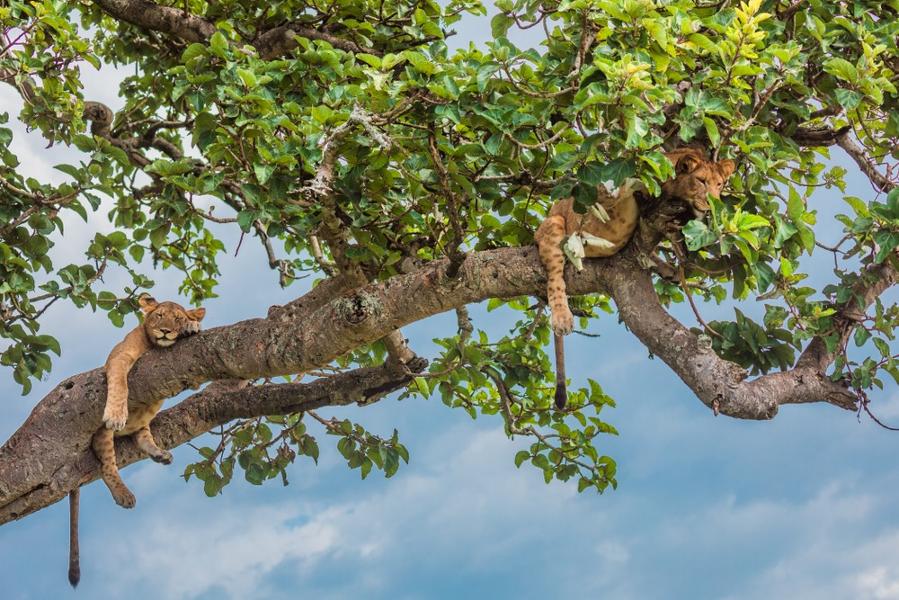
The Queen Elizabeth National Park is renowned for hosting unique lions known as tree-climbing lions. It's in the southern part of the park, at Ishasha, that you can witness this rare phenomenon where lions climb and lounge in the branches of large fig and sycamore trees.
Where to see leopards in Uganda?
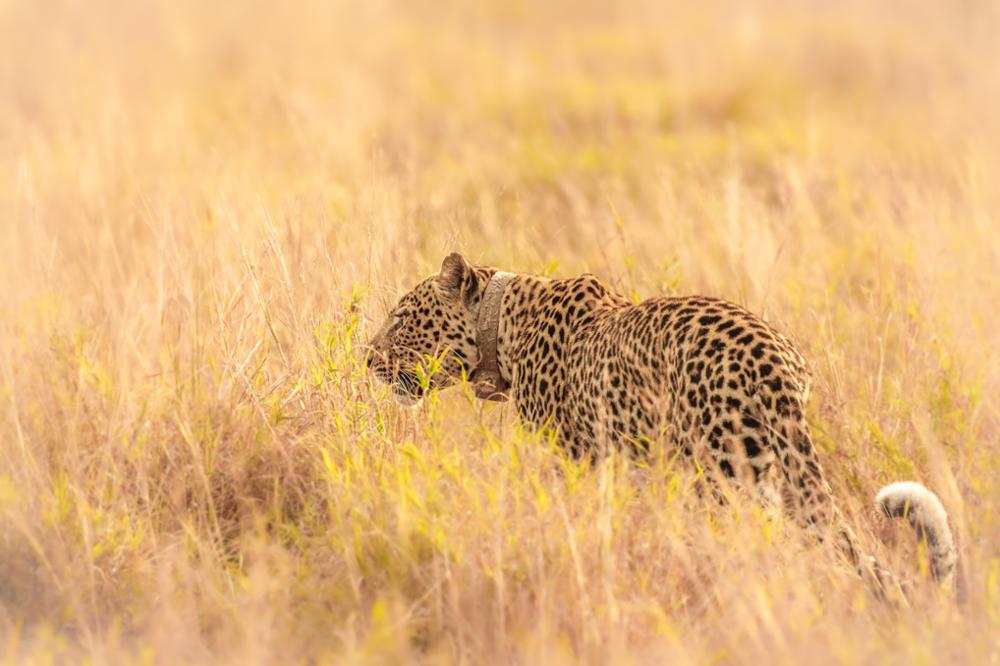
After lions, we move to the second feline of the Big Five: the leopard. A shy and nocturnal animal, it's the most elusive member of the Big Five and the most difficult to spot. It finds refuge in the wooded and rocky habitats of Uganda's national parks and forest reserves.
During a wildlife safari in Uganda, leopards can be observed in several parks and reserves across the country:
Queen Elizabeth National Park,
Kidepo Valley National Park,
Lake Mburo National Park,
Mount Elgon National Park,
the Toro-Semliki Wildlife Reserve,
the Bokora Reserve.
Worth knowing
Since the leopard is a nocturnal animal, we recommend opting for a night safari to increase your chances of spotting one!
Where to see elephants in Uganda?
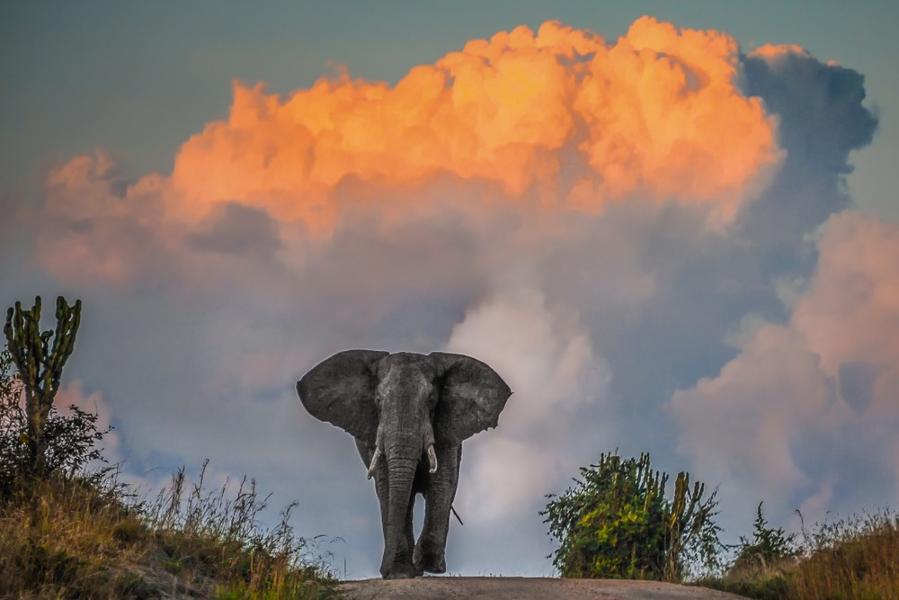
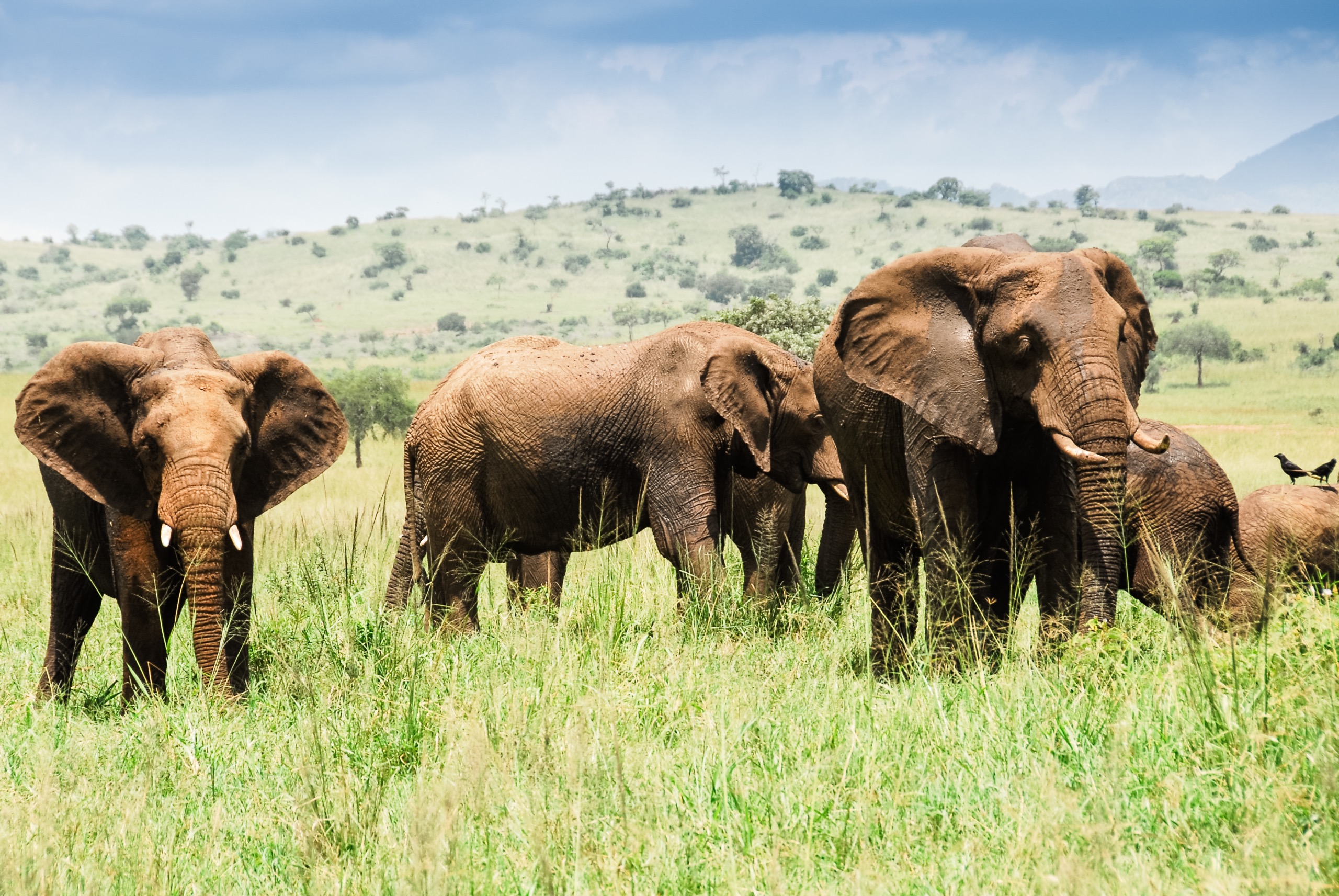
We continue with the largest member of the Big Five: the African elephant. Weighing up to 6,300 kilograms (for adult males), it's also the heaviest of the bunch! Uganda is home to approximately 6,500 elephants, which live mainly in the savannas of the country's national parks and in smaller numbers in the country's tropical forests.
With the exception of Lake Mburo National Park, you'll encounter elephants in virtually every national park in the country. Among the Ugandan sites where you can see elephants are:
Murchison Falls National Park,
Kidepo Valley National Park,
the forests of Mgahinga National Park,
Bwindi Impenetrable National Park,
the Bokora Reserve.
Our recommendation
To break from the traditional 4x4 safari experience, we recommend taking a Nile river boat safari within Murchison Falls National Park. It's an opportunity to observe these magnificent creatures coming to drink and cool off in the river. You'll also be able to see crocodiles, hippopotamuses and numerous water birds.
Where to see buffalo in Uganda?
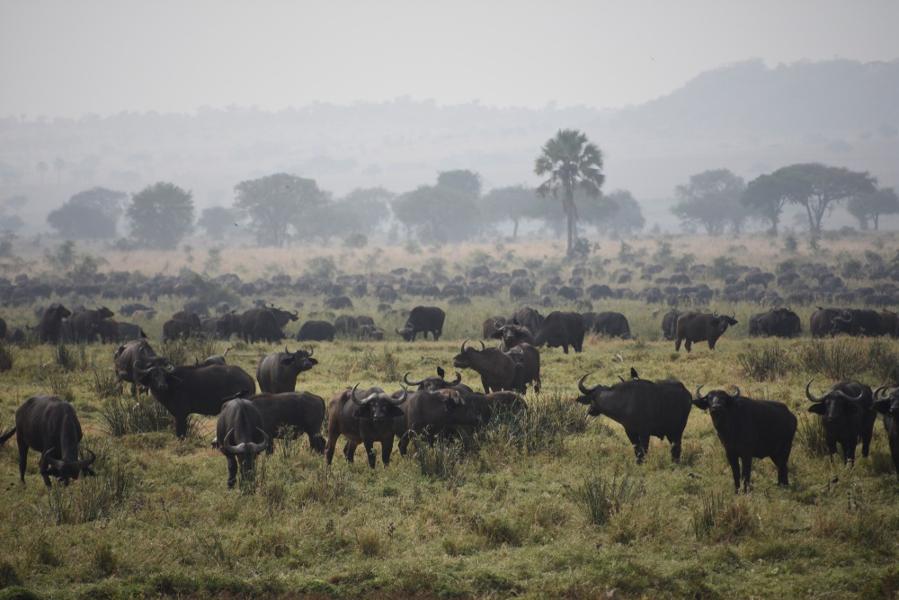
Don't be fooled by appearances! While not the largest of the group, the African buffalo is one of the most formidable of Africa's game animals. This is precisely why it features among the Big Five. Renowned for its incredible power, it's even more impressive when observed in herds.
Buffalo thrive in expansive grasslands, forest clearings and bushland savannas. In Uganda, the African buffalo lives mainly in large herds in savanna regions and in smaller herds in forested areas.
When visiting Uganda, you can see buffalo in almost every national park and the country's major forests:
Murchison Falls National Park,
Queen Elizabeth National Park,
Kidepo Valley National Park,
Mount Elgon National Park,
the Kabwoya Nature Reserve,
Mgahinga Gorillas National Park,
the Bokora Reserve,
the Pian-Upe Reserve,
the Kibale Reserve.
Worth knowing
It's possible to see several subspecies of African buffalo in Uganda. In Queen Elizabeth and Murchison Falls National Parks, for example, you can observe hybrids between the savanna buffalo (Syncerus caffer caffer) of East Africa and the forest buffalo (Syncerus caffer nanus) of West Africa. In the Pian-Upe Reserve, white-headed buffalo can also be found.
Where to see rhinoceros in Uganda?
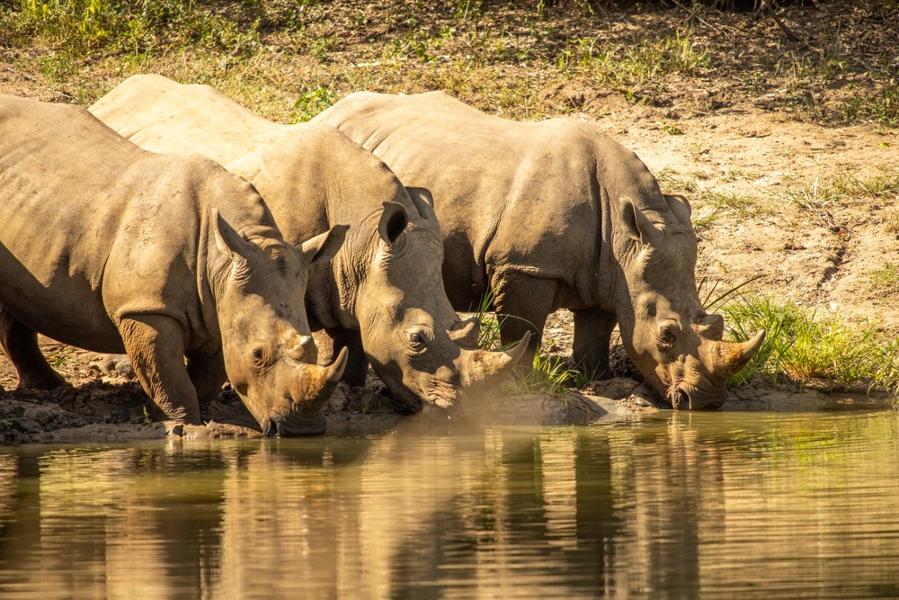
While most Big Five animals can be observed in virtually all of Uganda's national parks, there's one animal found in only a single location. That's the white rhinoceros, which can only be observed at the Ziwa Rhino Sanctuary.
Indeed, the white rhinoceros was long a victim of poaching for its horns. As a result? Between intense poaching and the destruction of natural habitats, rhinoceros populations were decimated until they completely disappeared from Uganda in 1983.
To protect this majestic endangered species and reintroduce it to Uganda, the NGO Rhino Fund Uganda launched a project in 1997, giving birth to the Ziwa Rhino Sanctuary. At the outset, 6 white rhinoceros imported from Kenya and Disney's Animal Kingdom in the United States were introduced. Since then, and according to 2020 figures, 32 individuals live within the sanctuary.
Ultimately, the goal is to reintroduce the species into its natural habitat, notably within Murchison Falls National Park.
As you can see, the only way to see rhinoceros in Uganda is to take a walking safari at the Ziwa Rhino Sanctuary.
Frequently asked questions
Yes, it is possible to observe all 5 Big Five animals in Uganda, although this requires visiting several different sites. Lions, leopards, elephants and buffalo are found in major national parks such as Murchison Falls, Queen Elizabeth and Kidepo Valley. For the white rhinoceros, you must go specifically to the Ziwa Rhino Sanctuary, the only place in Uganda where the species is present following its reintroduction.
The dry season (June to September and December to February) is generally the best time to observe animals in Uganda. Vegetation is less dense, animals congregate around water sources and park trails are more passable, making 4x4 safaris easier and more productive.
The white rhinoceros can only be observed at Ziwa Rhino Sanctuary, a sanctuary dedicated to protecting and reintroducing the species. By 2020, 32 individuals lived there. Visits take place as guided walking safaris. Ultimately, the goal is to reintroduce these rhinoceros to Murchison Falls National Park.
Uganda's famous tree-climbing lions, known for their habit of climbing and resting in the branches of large fig and sycamore trees, are found in the Ishasha sector in the south of Queen Elizabeth National Park. It's a rare phenomenon in Africa, found in only a few places worldwide.
Yes, the leopard is the most difficult Big Five animal to spot, as it is naturally shy, solitary and primarily nocturnal. To maximize your chances of observing one, opt for a night safari in parks such as Queen Elizabeth, Murchison Falls or Kidepo Valley.
Entrance fees to Ziwa Rhino Sanctuary may vary. It is advisable to consult the official Rhino Fund Uganda website or contact your travel operator for current rates and to book your visit in advance.