Rift and Queen Elizabeth
Queen Elizabeth National Park between Lakes George and Edward, the tree-climbing lions of Ishasha and the glaciers of the Rwenzori at 5,109 metres: western Uganda in a single itinerary.
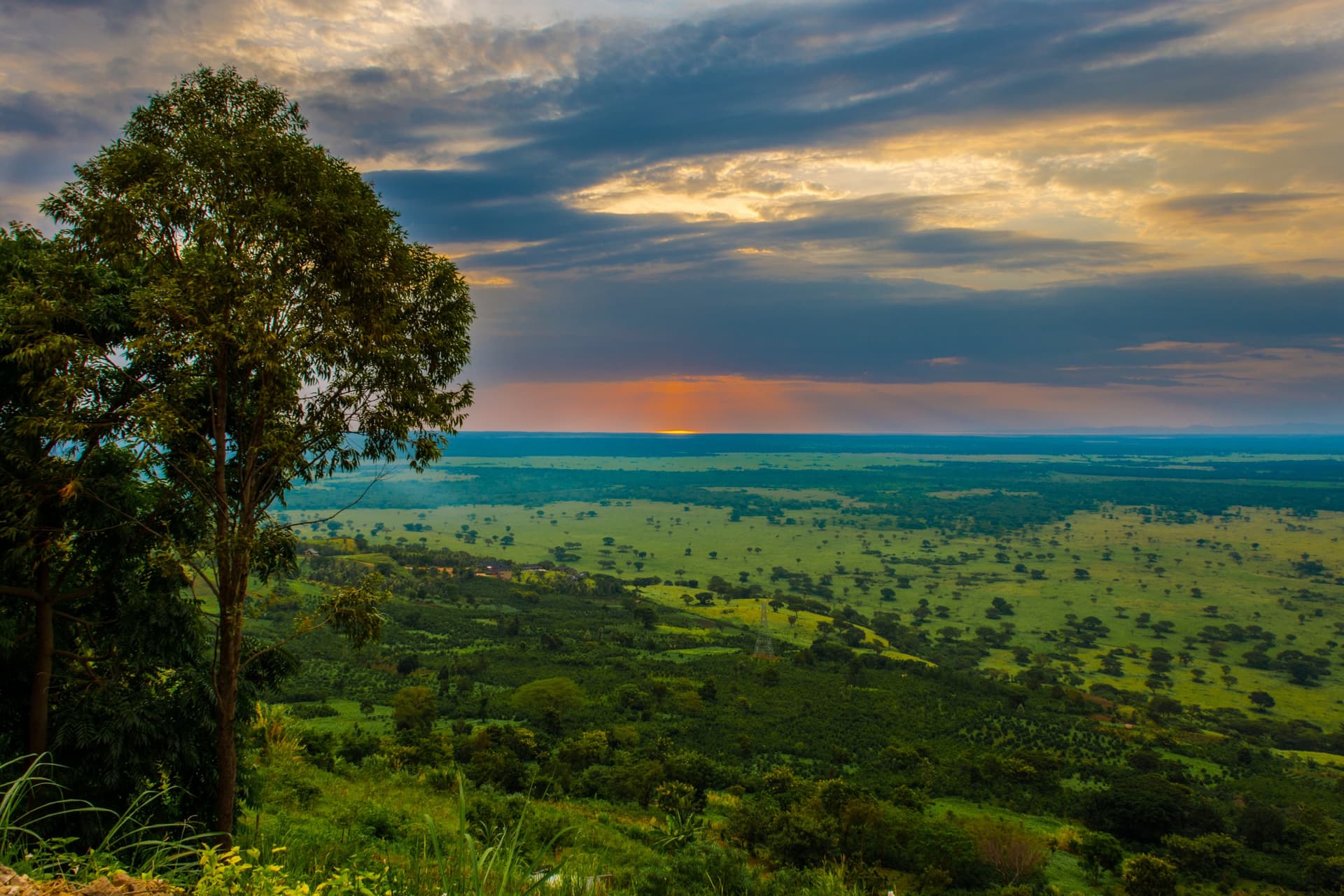
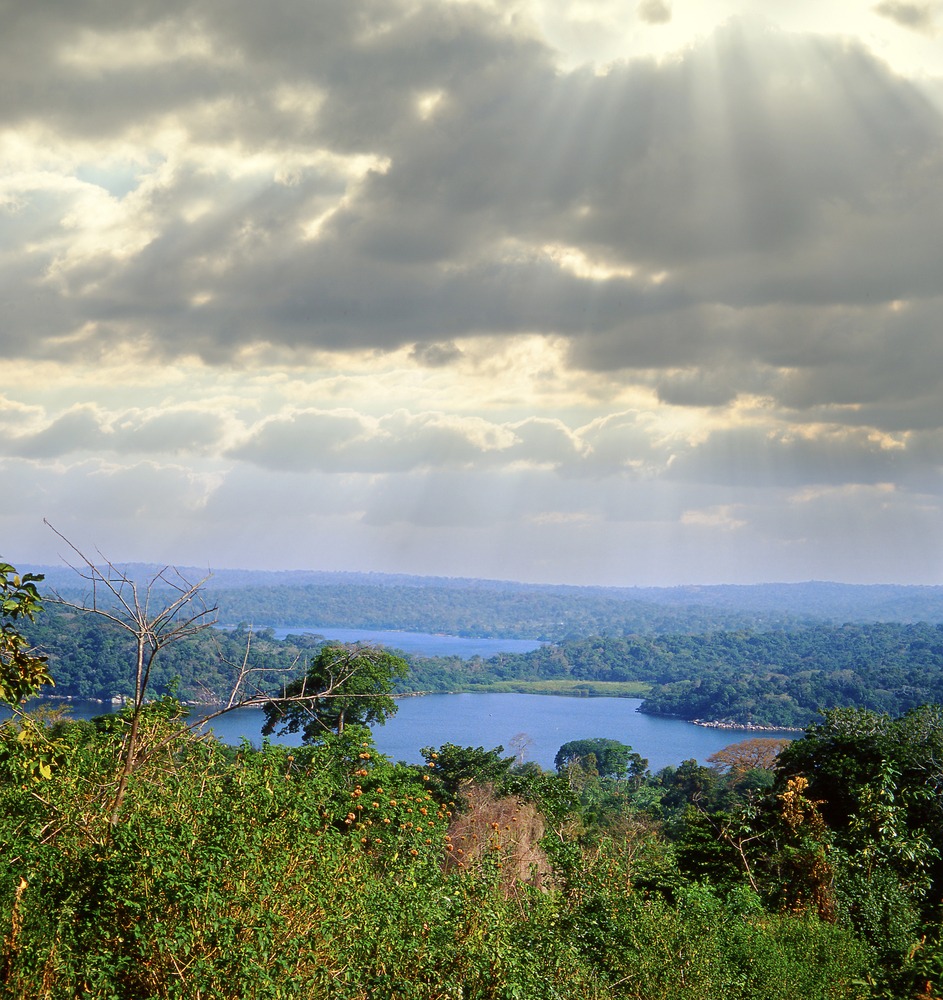
The Albertine Rift Valley cuts through western Uganda from north to south, and Queen Elizabeth National Park occupies its heart across nearly 2,000 km². Our team has been bringing travelers here from Kampala, roughly 6 to 7 hours by road via Mbarara, or faster by charter flight to the airstrips at Mweya or Kasese. The park stretches between Lake George to the northeast and Lake Edward to the southwest, two shallow lakes connected by the Kazinga Channel, a 32 km waterway that structures all the region's wildlife.
The landscape is more open than Bwindi: grassy savannas dotted with candelabra euphorbia, acacia plains, volcanic craters in neat succession northward toward Katwe, and the silhouette of the Rwenzori as a backdrop whenever the sky clears. Margherita Peak rises to 5,109 metres and still carries residual glaciers, though the ice cap shrinks year after year. South of the park, the Ishasha sector tips onto a drier plateau, crossed by the river of the same name which marks the border with the Democratic Republic of Congo.
The region is inhabited by the Banyankole and Bakonzo peoples; the latter live on the slopes of the Rwenzori where they cultivate arabica coffee and banana plants in terraces up to 2,000 metres. Around Fort Portal, capital of the Tooro kingdom, the landscape shifts again: some thirty crater lakes dot the hills, some acidic and barren, others fringed with tea plantations. The Kibale market in the morning offers matoke (plantains), millet and luwombo, a meat stew slow-cooked in banana leaves that our travelers often taste during a village visit.
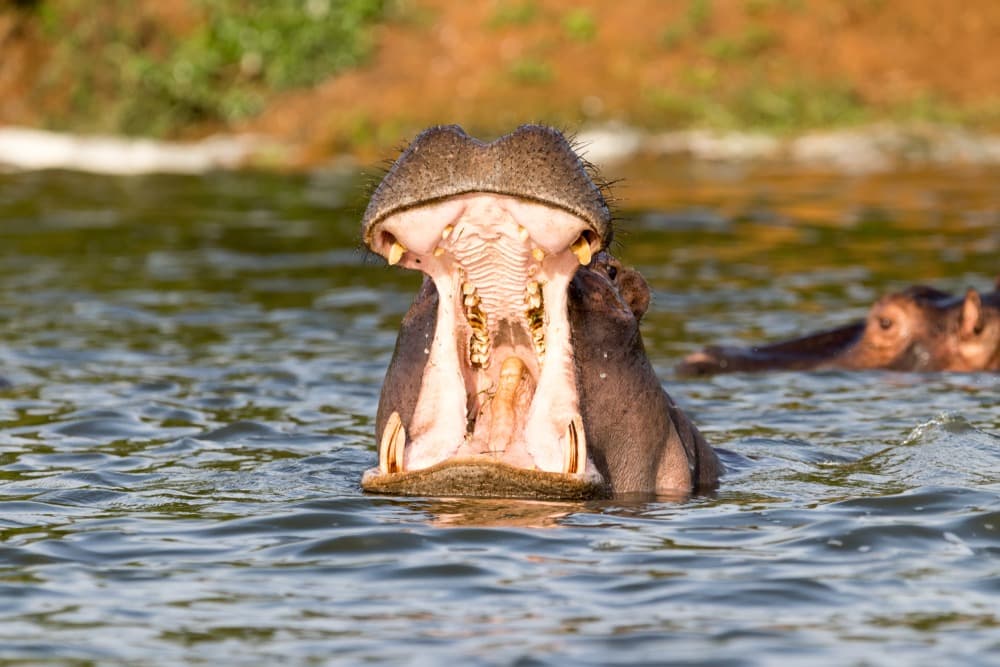
Queen Elizabeth concentrates dense but elusive wildlife. The Kazinga Channel, explored by boat for two hours from Mweya, reveals hippopotamuses in groups of several dozen, buffalo, elephants coming to drink in late afternoon, and more than 600 bird species recorded in the park, including the giant kingfisher and the shoebill in the marshy zones to the north. The Ishasha sector, two hours by track south of Mweya, is one of the rare places in Africa where lions regularly climb into sycamore figs between 11am and 4pm, behaviour probably linked to flies and ground heat.
Further north, the Rwenzori range is climbed from the village of Nyakalengija. The central circuit takes 7 to 9 days depending on whether you summit or not, with nights in wooden refuges between 2,600 and 4,500 metres. The terrain alternates wet forest, bamboo thickets, moorland with giant groundsels and glacial moraines. Night temperatures at altitude drop below freezing, and crossing the peat bogs requires gaiters: this is not a contemplative walk, it is technical trekking. For travelers who prefer altitude without the summit, 2 to 3-day hikes to Lake Mahoma or the Mubuku valley offer a solid taste of the ecosystem.
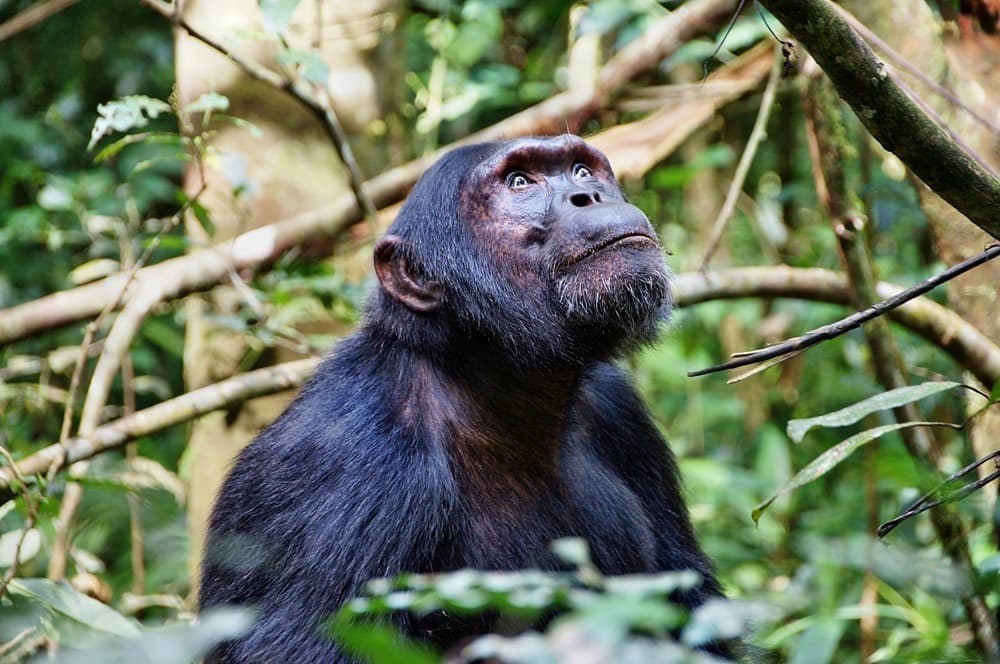
This region also lends itself to gentler days: visits to the Katwe salt ponds, where artisanal salt extraction has followed the same gestures since the 16th century, walks through Maramagambo Forest in search of chimpanzees and kob antelope, or simple crossing of the equator near Kikorongo, marked by a painted circle on the ground.
To discover
Cruise on the Kazinga Channel. Two hours by boat between Lakes George and Edward, as close as possible to hippo banks and elephants coming down to drink in late afternoon.
Tree-climbing lions of Ishasha. In the southern sector of the park, observe lions sprawled in the low branches of sycamore figs during the hot hours, between 11am and 4pm.
Crater lakes of Fort Portal. Some thirty craters in succession around Kibale, some swimmable like Lake Nyinambuga, others fringed with tea plantations of the Tooro kingdom.
Ascent of the Rwenzori. A 7 to 9-day trek on the central circuit from Nyakalengija, to the glaciers of Margherita Peak at 5,109 metres, through moorland with giant groundsels and moraines.
Artisanal salt ponds of Katwe. Salt extraction from crater basins using techniques unchanged since the 16th century, 20 minutes from Mweya.
When to go
We recommend the dry seasons for Queen Elizabeth: June to September, then December to February. The park tracks, particularly those in Ishasha, become difficult to navigate during the March-May and October-November rains, with monthly totals exceeding 150 mm. Temperatures at Mweya range between 18°C at night and 30°C during the day year-round, with altitude remaining moderate around 900 metres.
For the Rwenzori, the window is narrower: December-February and June-August offer the best conditions, with less precipitation on the higher slopes. Even in the dry season, plan for daily rain in the forest between 2,000 and 3,000 metres, and temperatures below freezing above 4,000 metres. Around Fort Portal and the crater lakes, the climate is cooler (15-25°C) due to the 1,500-metre altitude, and late-afternoon showers are frequent even in the so-called dry season.
Practical advice
Plan for a minimum of two nights at Queen Elizabeth: one at Mweya for the Kazinga Channel and northern plain, one at Ishasha for the tree-climbing lions. Three nights are more comfortable if you want to add Maramagambo or the salt ponds. For the Rwenzori, allow 7 to 9 days of trekking plus travel days and an acclimatization stop at Fort Portal. Access is from Kampala by road via Mbarara (6-7 hours) or by charter flight to Kasese, which we arrange on request.
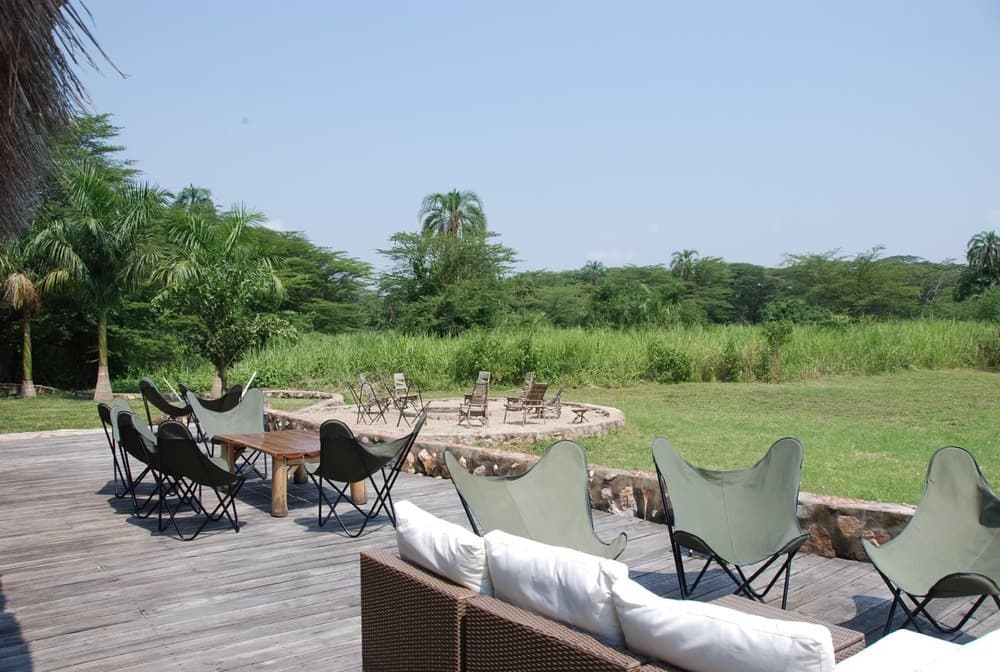
The region naturally connects with the Southwest and Bwindi for gorilla tracking, 3-4 hours by track from Ishasha. Our agency's classic combination chains Murchison and the Nile to the north, then Queen Elizabeth, then Bwindi, over 12 to 15 days. Comfort ranges from simple tented camps at Ishasha to more developed lodges at Mweya and Katara. This region suits travelers who want to combine classic safari, hiking and encounters with the traditional Tooro and Bakonzo kingdoms. Families with children will find plenty to do thanks to reasonable distances between activities, with the exception of the Rwenzori trek, reserved for experienced walkers.