Central Uganda and Kampala
The logistical and cultural pivot of Uganda: Kampala spread across seven hills, Entebbe on the shores of Lake Victoria, the source of the Nile at Jinja, and Mabira Forest.
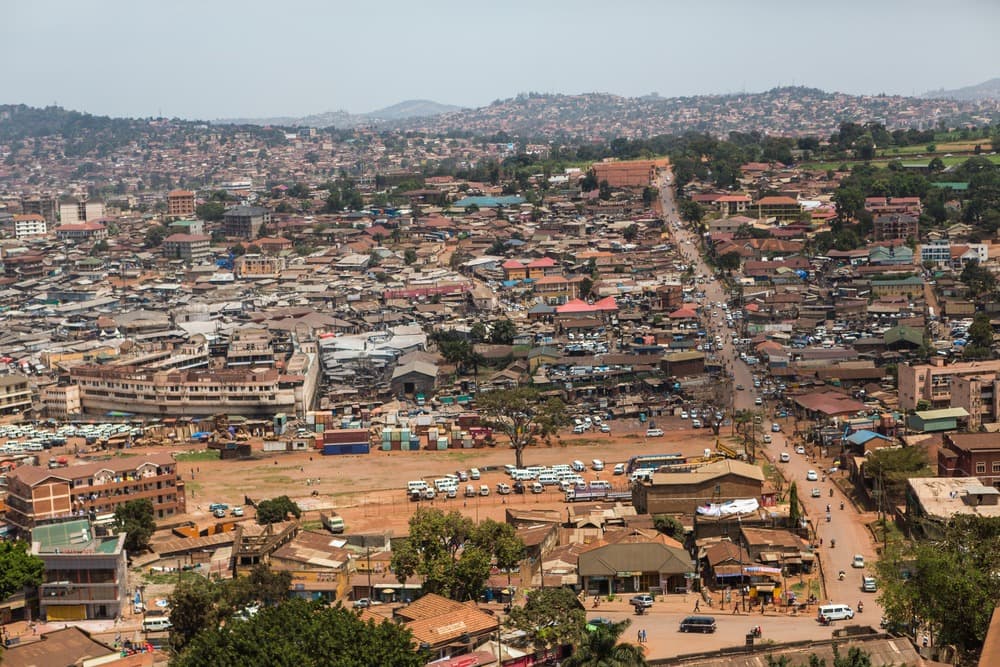
Central Uganda concentrates the country's economic and cultural life around Kampala, the capital sprawled across seven hills at 1,200 meters elevation, and Entebbe, its neighboring port town perched on a peninsula of Lake Victoria. This is where our English-speaking team is based, roughly forty minutes from Entebbe International Airport depending on traffic—which can be heavy in late afternoon on the Entebbe-Kampala road.
Kampala is not a museum city. You move through it by boda-boda, these motorcycle taxis that weave between matatu minibuses, and you taste it in its markets. Owino, also known as Saint Balikuddembe, brings together tens of thousands of vendors across just a few hectares in the city center. At Nakasero, you'll find fruits, spices, and smoked fish from the lake. On the heritage side, the Kasubi Royal Tombs, a UNESCO World Heritage site, house the burial chambers of the last kings of Buganda beneath a vast thatched case rebuilt after the 2010 fire. The Gaddafi Mosque, perched on Old Kampala hill, offers from its minaret a clear reading of the city's topography and successive hills: the Anglican Cathedral of Namirembe, the Catholic Cathedral of Rubaga, and the Uganda Martyrs Shrine at Namugongo.
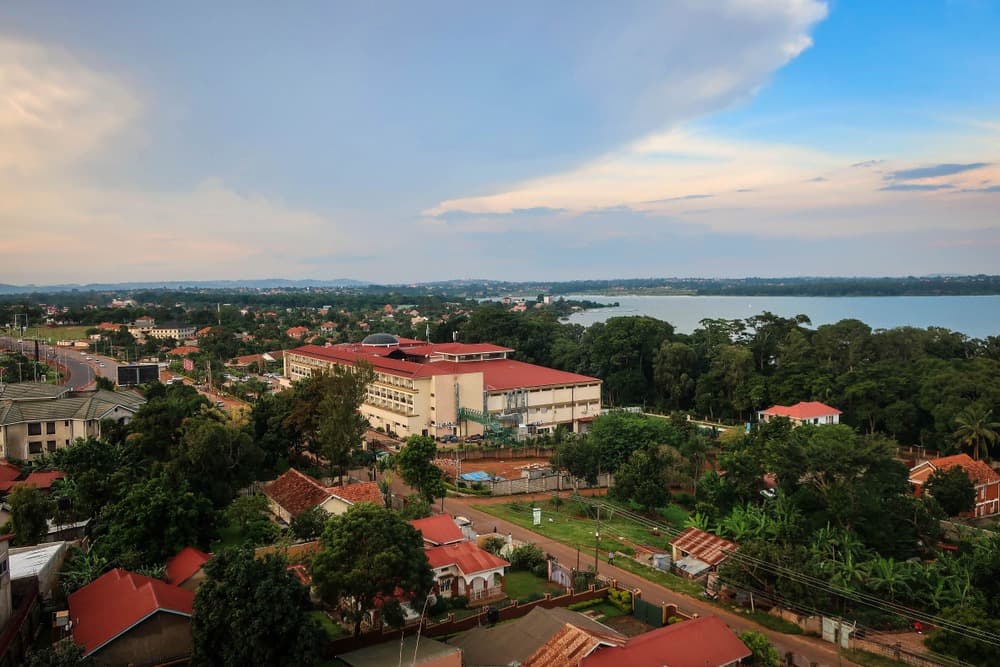
Entebbe has a different rhythm. Once the colonial capital, it retains wooden bungalows beneath mango trees, a botanical garden founded in 1898 where vervet monkeys and hornbills live, and the Uganda Wildlife Education Center (UWEC) on the lakeshore. Many travelers spend their first and last nights here to avoid Kampala traffic. From Kasenyi port, boats serve the Ssese Islands, an archipelago of nearly a hundred islands including Bugala, where you can stop for a night or two to break up a packed itinerary.
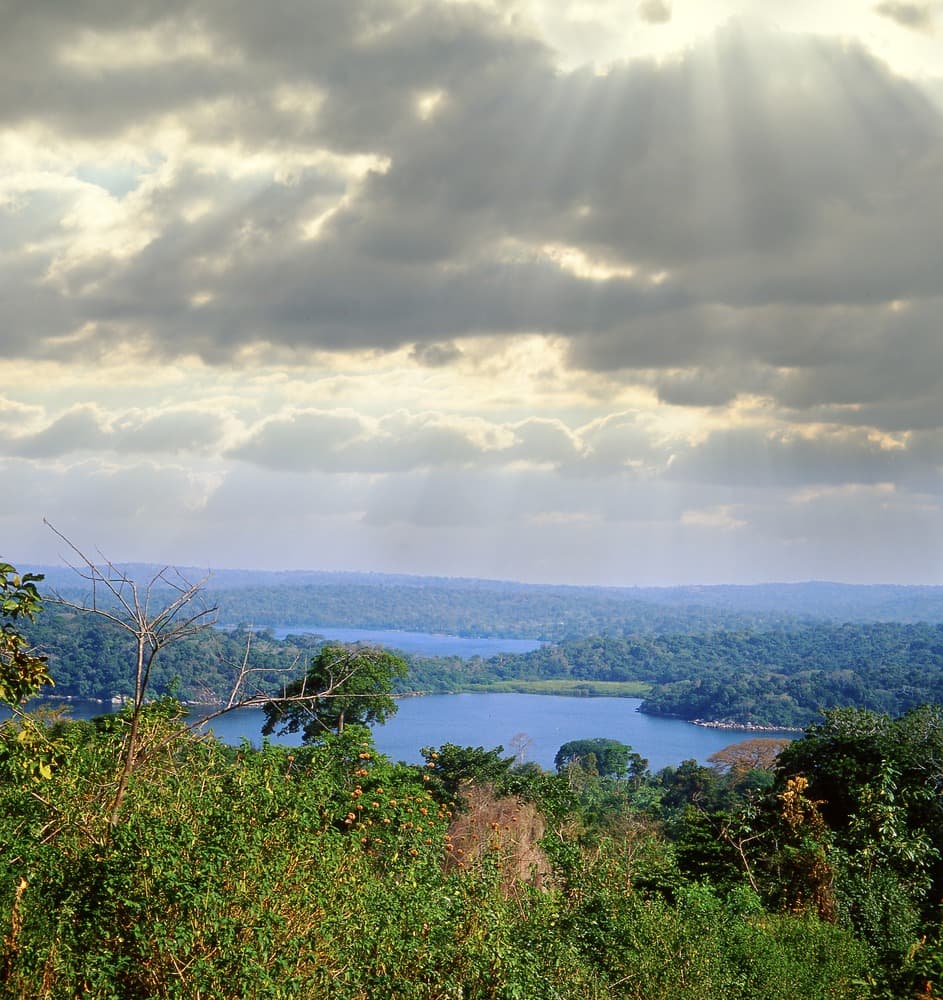
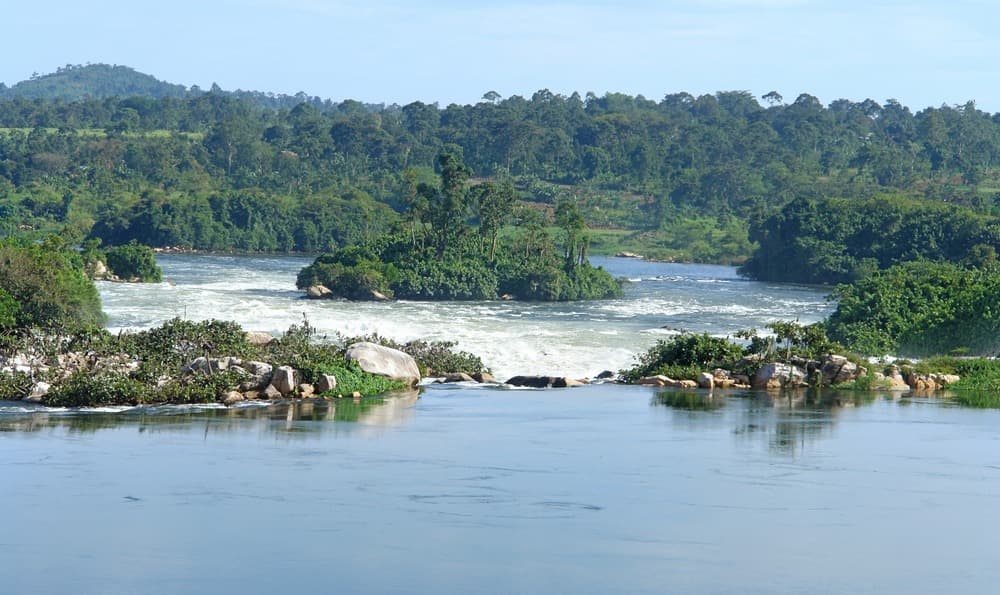
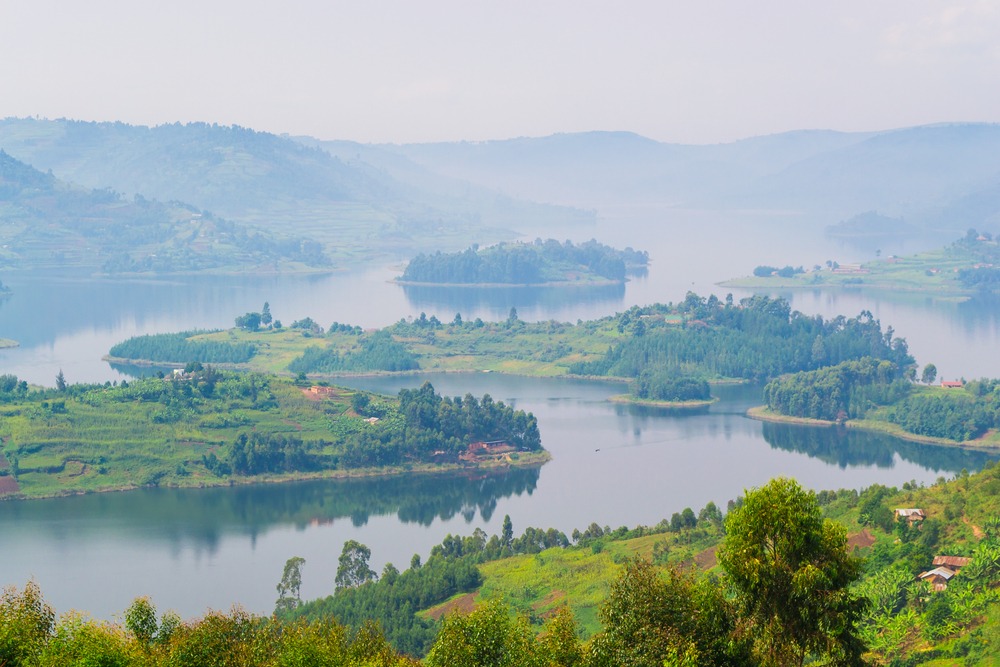
Some 80 kilometers east via the Kampala-Jinja road lies the source of the White Nile. Jinja, the country's second city, thrives on the river and industry. Since the construction of the Bujagali Dam in 2012, the historic rapids have been submerged, but Class 4 and 5 rafting remains among East Africa's most reliable on the section downstream. For families or less adventurous travelers, gentle kayaking, paddleboarding, or sunset cruises depart from the same area. Between Kampala and Jinja, Mabira Forest covers 300 square kilometers of lowland tropical rainforest. A community of chimpanzees is undergoing habituation here, and over 300 bird species have been recorded, including the rare grey-headed nakanga.
On the culinary side, central Uganda is the region of matoke, plantain banana steamed in its own leaves and then mashed, served with peanut sauce (binyebwa) or beans. Luwombo, a stew of chicken, beef, or fish also cooked en papillote in banana leaves, is a festive Baganda dish. In Kampala, you'll find rolex, a chapati rolled around an omelet with tomatoes and onions, sold for a few thousand shillings in the street. The region is predominantly populated by the Baganda, the country's largest ethnic group, whose king, the Kabaka, retains an important cultural role. Lubiri Palace and the Bulange traditional parliament in Kampala testify to this monarchy, which survived despite its suspension between 1966 and 1993.
This region serves as the logistical hub for all our circuits. You arrive here, you depart from here, and you can spend one to three full days depending on your interest in urban exploration and your desire to linger on the Nile or in the forest.
What to Discover
Kasubi Royal Tombs. The burial chambers of the last Kabakas of Buganda beneath a large circular thatched case, rebuilt identically after the 2010 fire. UNESCO-listed.
Source of the Nile at Jinja. The official point where the river leaves Lake Victoria. Class 4 and 5 rafting on the downstream section, or peaceful kayaking and sunset cruises for families.
Mabira Forest. 300 square kilometers of humid forest between Kampala and Jinja, explored on foot with a local guide to spot chimpanzees undergoing habituation, turacos, and giant plantain-eaters.
Kampala Markets. Owino for its abundance of textiles and fresh produce, Nakasero for fruits and spices, walked with our team to understand daily life in Kampala.
Ssese Islands on Lake Victoria. An archipelago of nearly a hundred islands accessible from Entebbe or Bukakata. Sandy beaches, artisanal fishing, and a very slow pace for a night or two at the end of your circuit.
When to Go
Central Uganda can be visited year-round. The altitude of Kampala and Entebbe (1,130 to 1,200 meters) moderates temperatures, which fluctuate between 17°C at night and 27 to 29°C during the day, with no truly cold season or extreme heat. Rainfall follows two peaks: March to May (long rains, showers often in late afternoon, sometimes several consecutive days) and October to November (short rains, more scattered). The driest and most pleasant months for walking Kampala and navigating Lake Victoria are December-February and June-August.
For rafting at Jinja, water levels are stable thanks to the dam, making the activity viable year-round. However, Mabira Forest is more challenging during rainy months: muddy trails, leeches, and reduced bird activity mid-day. If bird watching is a priority, aim for January-February or June-July.
Practical Advice
Plan for 1 to 3 days in this region depending on your profile. One night in Entebbe upon arrival to recover from your flight, then a full day in Kampala (markets, Kasubi, Gaddafi Mosque, the Kabaka's Palace) is sufficient if you mainly want to move on to the parks. Travelers interested in the Nile should add one to two nights in Jinja, with a half-day of rafting or kayaking, and a morning in Mabira on the return journey.
Entebbe International Airport is the only air entry point. From here, all our circuits depart by road: 5 to 6 hours to Murchison and the Nile to the northwest, 7 to 8 hours to Queen Elizabeth and the Rift to the west, 9 to 10 hours to Bwindi to the southwest, and roughly 10 hours to Kidepo to the north (often combined with a domestic flight). Central Uganda naturally combines as an arrival and departure gateway. Hotel comfort is among the country's best, from garden lodges in Entebbe to boutique hotels on Kampala's hills. The region suits all profiles, with particular appeal for travelers curious about contemporary African cities and for families seeking a gentle warm-up before safari.