Health Precautions to Know Before Meeting Primates in Ouganda
You've decided: you're going on a journey to meet the gorillas and chimpanzees of Ouganda!
You've decided: you're going on a journey to meet the gorillas and chimpanzees of Ouganda ! While the excitement is building, encountering primates isn't something to take lightly.
Vaccination requirements, health recommendations, codes of conduct… Discover everything you need to know before meeting primates on a trip to Ouganda.
What are the required and recommended vaccines for traveling to Ouganda?
Yellow fever vaccination is mandatory to enter Ouganda. Anyone (except those with contraindications) over 1 year old, regardless of country of origin, must present proof of vaccination to enter the territory. The vaccine must be administered at least 10 days before departure at an approved center.
Apart from the yellow fever vaccine, no other vaccine is mandatory for traveling to Ouganda. However, certain vaccines are recommended! According to France Diplomatie, authorities recommend:
keeping up-to-date with routine vaccinations;
staying current with diphtheria-tetanus-poliomyelitis (DTP) vaccination, measles-mumps-rubella (MMR) vaccination in children, and antituberculous vaccination;
getting vaccinated against bacterial meningitis A + C + Y + W135;
obtaining vaccinations against typhoid fever and viral hepatitis A and B depending on your specific travel conditions.
In general, it is highly recommended to consult your doctor or visit an international vaccination center such as the Institut Pasteur to review your health status and potential risks based on your travel itinerary.
Specialists can also recommend treatment for malaria and rabies vaccination if you plan to trek in the wilderness, as you will when observing gorillas and chimpanzees.
Why get vaccinated before meeting gorillas and chimpanzees in Ouganda?
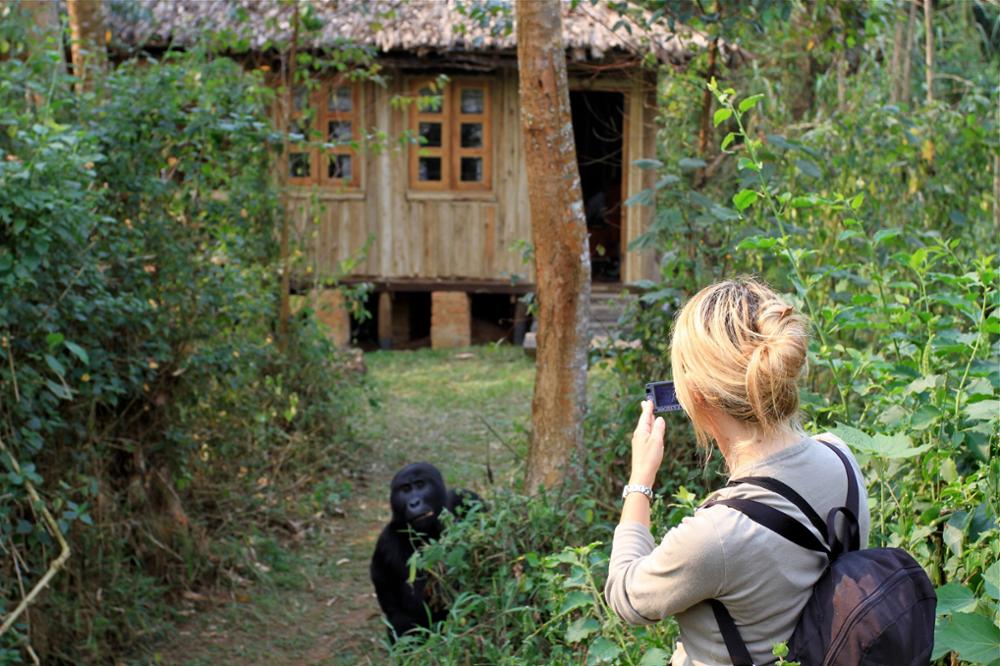
With a genetic heritage remarkably close to humans, gorillas and chimpanzees are susceptible to infections. Yellow fever, hepatitis, tuberculosis… They can carry viruses and be contaminated very easily by humans.
To protect them and take precautions for your own health, you must therefore be extremely careful. Whatever your itinerary—whether it's gorilla observation or chimpanzee observation—you will receive all information about health conditions before departure (see next section).
Although yellow fever is the only mandatory vaccine in Ouganda, nothing prevents you from taking additional precautions before leaving. You can, for example, have a serology test to verify your immunity status against measles and tuberculosis.
Rules to Follow When Observing Gorillas and Chimpanzees
As you understand, any stay meeting the gorillas and chimpanzees of Ouganda must not be taken lightly, for your own health and that of the animals.
This is why specific rules of conduct will be explained during a briefing with your guide before heading into Ouganda's wild forests. Here are some examples of the guidelines:
Report any apparent symptoms before departure and never risk going on an expedition if you are sick, even with just a cold, to avoid endangering the animals;
Wear a mask and wash your hands thoroughly several times a day;
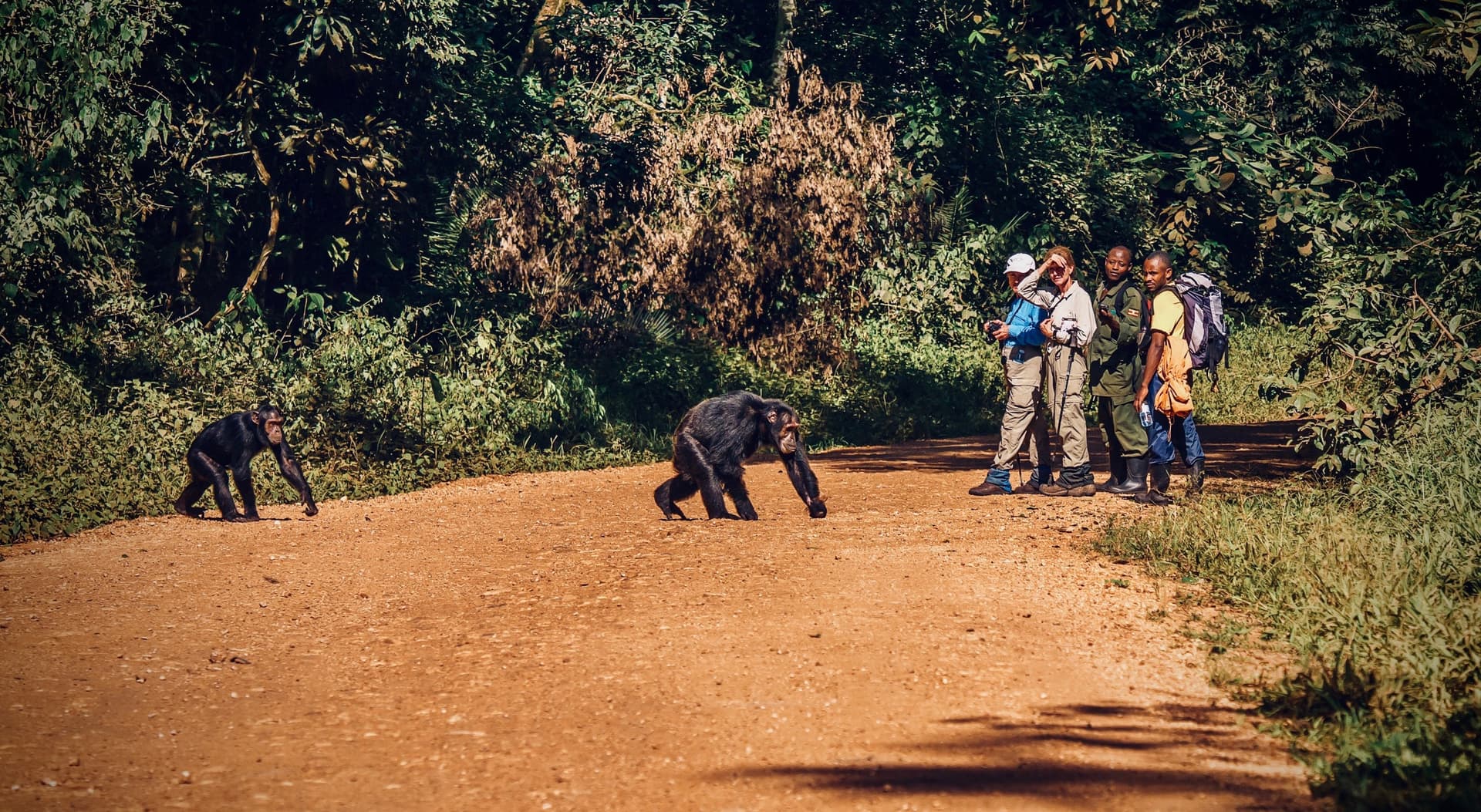
Maintain a safety distance from gorillas and chimpanzees (minimum 7 meters);
Do not attempt to approach or touch the gorillas and chimpanzees;
Do not sneeze or blow your nose in the presence of the animals;
Do not eat or drink in the presence of the primates;
Do not smoke;
Leave no waste or other objects behind;
Always stay in a group;
Remain calm and as silent as possible;
Never use flash photography—it is forbidden.
Note: To preserve the tranquility of gorilla and chimpanzee families living in Bwindi National Park and Kibale Reserve, the number of daily visitors is limited. We therefore recommend booking well in advance.
Frequently asked questions
Yellow fever vaccination is the only mandatory vaccine to enter Ouganda. It must be administered at least 10 days before departure at an approved center, and anyone over 1 year old must present proof of vaccination upon entering the territory.
No. It is strongly discouraged, and often prohibited by guides, to go on a gorilla observation expedition if you have symptoms, even just a cold. Since gorillas are genetically close to humans, they are highly vulnerable to human diseases.
Health regulations require maintaining a minimum distance of 7 meters from gorillas and chimpanzees during observation treks in Ouganda, to protect the animals from any human contamination.
Rabies vaccination is recommended if you plan to trek in the wilderness, particularly when observing gorillas in Bwindi National Park or chimpanzees in Kibale Reserve. Consult your doctor or an international vaccination center to assess this need based on your itinerary.
To preserve the tranquility of gorilla families, the number of visitors per day is strictly limited in Bwindi National Park. It is therefore strongly recommended to book your observation permit well in advance.