Mgahinga Gorilla National Park
Mgahinga Gorilla National Park
On the border of Rwanda and Congo, Mgahinga combines gorilla trekking, golden monkeys, Virunga volcanoes, and Batwa culture in an intimate highland sanctuary.
As its name suggests, Mgahinga Gorilla National Park is a refuge for some of the planet's last mountain gorillas. Cradled between clouds, between 2,227 m and 4,127 m elevation, the reserve and its dense forests, threaded with countless hiking trails, also constitute a vital habitat for the golden monkey, equally endangered.
History
Mgahinga lies in Uganda's southwestern corner, at the border of Congo and Rwanda. In 1930, the British established a game sanctuary in the region to protect wildlife, particularly mountain gorillas. The site then became a forest reserve in 1941 to preserve natural landscapes. In 1989, the game reserve and gorilla conservation project was overhauled following international pressure. The departments managing the forest and wildlife collaborated with a private German organization to conduct deeper research on the animals and establish sustainable tourism practices. Mgahinga Gorilla National Park was born two years later, in 1991, within the boundaries of the original sanctuary.
Etymologically, Mgahinga derives from the word Gahinga, which refers to heaps of volcanic stones cleared from agricultural fields at the base of the local volcanoes.
Discovering Mgahinga Gorilla National Park
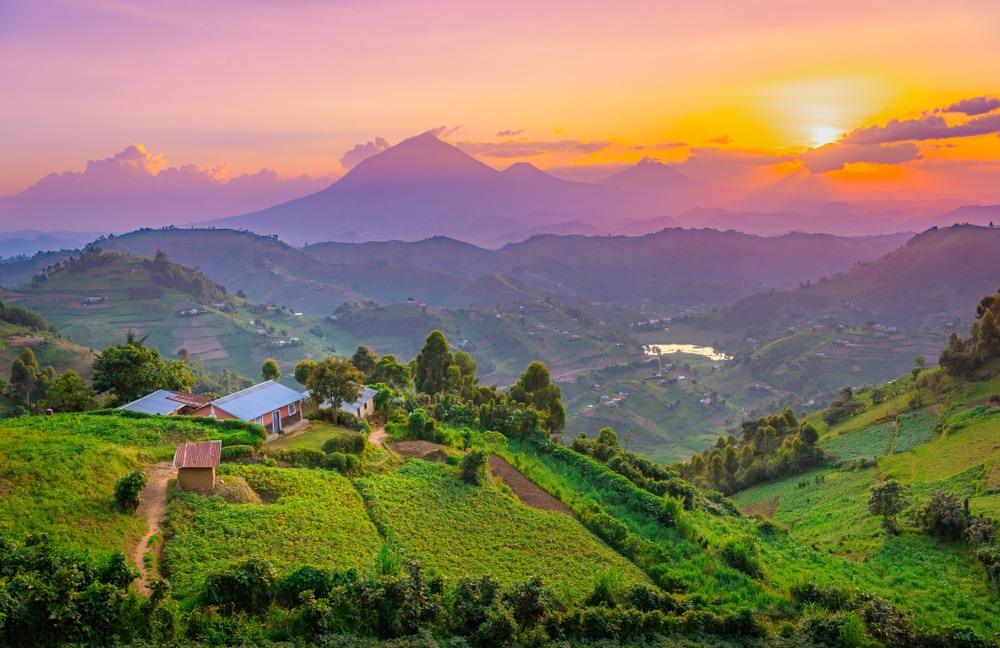
Mgahinga may be Uganda's smallest national park, but it is hardly the least beautiful. Many would argue it's the country's most picturesque reserve—judge for yourself! Three extinct volcanoes, part of the Virunga mountain range, dominate the landscape. Naturally, it's magnificent hiking terrain, but visitors come to the park primarily for gorilla safaris, and in doing so, to encounter Africa's last golden monkeys.
A vital wildlife haven, Mgahinga is also a land of rich culture. It is home to the Batwa pygmies, a hunter-gatherer tribe considered the "first people of the forest."
Meet the Gorillas of Mgahinga
Here is an adventure you won't soon forget! The gorilla safari at Mgahinga feels like a small expedition. Your journey begins at the Ntebeko gate and immerses you in wild forests where you'll spend several hours before making first contact with the primates. Armed wildlife rangers will use the trek to acquaint you with the natural environment and the lives of mountain gorillas.
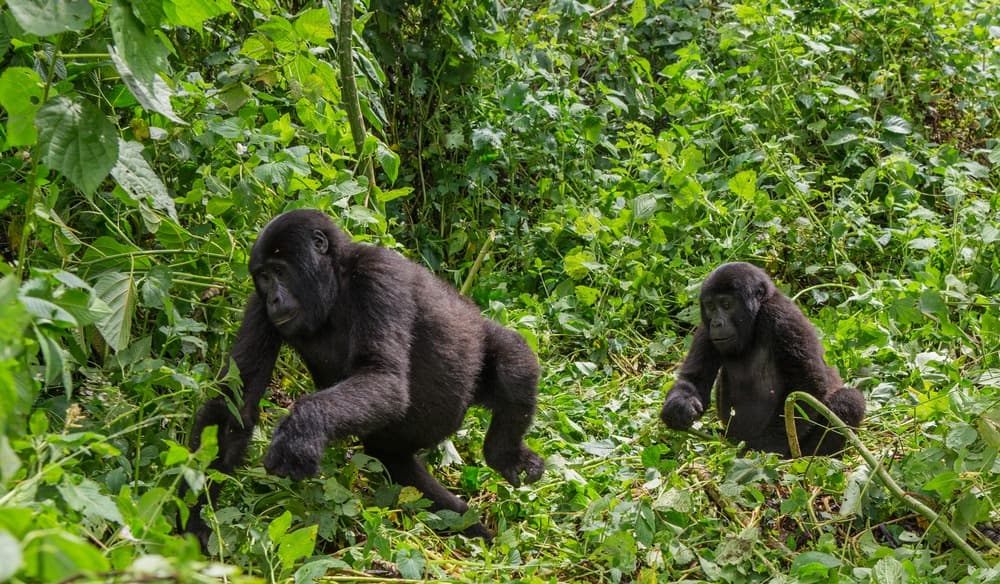
Mgahinga welcomes a single habituated gorilla group called Nyakagezi, comprising two silverbacks, three adult females, two juveniles, and two infants. Most of the time, they are visible in a bamboo forest. Once you've made contact, you have one hour to observe them. These shaggy creatures may appear aggressive at first glance, but don't be deceived—gorillas are peaceful and the safari is entirely safe. That said, avoid getting too close; respect the 7-meter safety distance and refrain from using flash when taking photographs. A gorilla trek at Mgahinga also offers the chance to search for the golden monkey, Cercopithecus kandti, an endangered species endemic to the park.
Explore Enchanting Landscapes
Well before encountering the gorillas, Mgahinga's landscapes will already captivate you! Various hiking routes, suited to all fitness levels, lead toward the summits of Gahinga, Sabinyo, and Muhabura. For the less athletic, gentle walks wind along the lower slopes of the mountains.
Always keep your camera within reach—many birds are worth photographing within the park. Pay particular attention when crossing wetlands and the buffalo zone. Among the reserve's avian residents are the ibis, Moorland francolin, Rwenzori turaco, white-tailed flycatcher, crowned hornbill, dark-capped dove, Kivu ground-thrush, and many other fascinating species.
For cultural encounters, follow the footsteps of the forest people. The Batwa trail begins at the Muhuvura cave and leads deep into a living museum. In the company of tribe members, discover ancient hunting and honey-harvesting techniques. Learn traditional plant-based medicine and bamboo cup craftsmanship. Finally, visit the sacred Ngarama cave, which once served as a refuge for the Batwa king.
Practical Information
Located about fifteen kilometers away, Kisoro is the nearest town to Mgahinga Gorilla National Park. A steep mountain road serves the park entrance from the town. The journey takes approximately 45 minutes. A 4x4 vehicle is strongly recommended for traveling this route, especially during rainy periods (February to May and September to November). Kampala is 510 km away; expect at least nine hours of travel from the capital to reach the park. Mgahinga is also connected by road to Queen Elizabeth National Park (6 hours) and Lake Mburo National Park (5 to 7 hours).
When to Visit?
The best times for gorilla trekking at Mgahinga span June to August and December to January. These periods correspond to the dry season, when trails are dry and easier to navigate. Consequently, it is peak tourist season. Visitor numbers are higher, as are gorilla permit requests. Try to book in advance.
You can visit the park during the rainy seasons, between February and May and September to November, but prepare for hikes on wet and sometimes slippery trails. These periods do offer a major advantage: the opportunity to witness the reserve's range of migratory bird species.
Rates
To participate in gorilla trekking in Mgahinga Gorilla National Park, you must present a valid gorilla permit. This authorization is issued by the Uganda Wildlife Authority (UWA) and costs 700 USD.
Want to discover this destination?
Our local advisors design your tailor-made trip.