Bwindi Impenetrable National Park
Bwindi Impenetrable National Park
In the heart of southwestern Uganda, Bwindi protects nearly half of the world's mountain gorillas and one of East Africa's most biodiverse ecosystems.
A true invitation to wilderness adventure, Bwindi Impenetrable National Park beckons with thrilling expeditions during a journey through Uganda, into the heart of East Africa. A genuine sanctuary for a rich population of primates—gorillas, monkeys, and chimpanzees—this park promises unforgettable experiences in nature.
Bwindi Impenetrable National Park at a glance
Located in southwestern Uganda, the magnificent Bwindi Impenetrable National Park spans 331 km² along the border of the DRC (Democratic Republic of Congo) and Rwanda. It nestles near the Virunga National Park, bordering the Great Rift Valley.
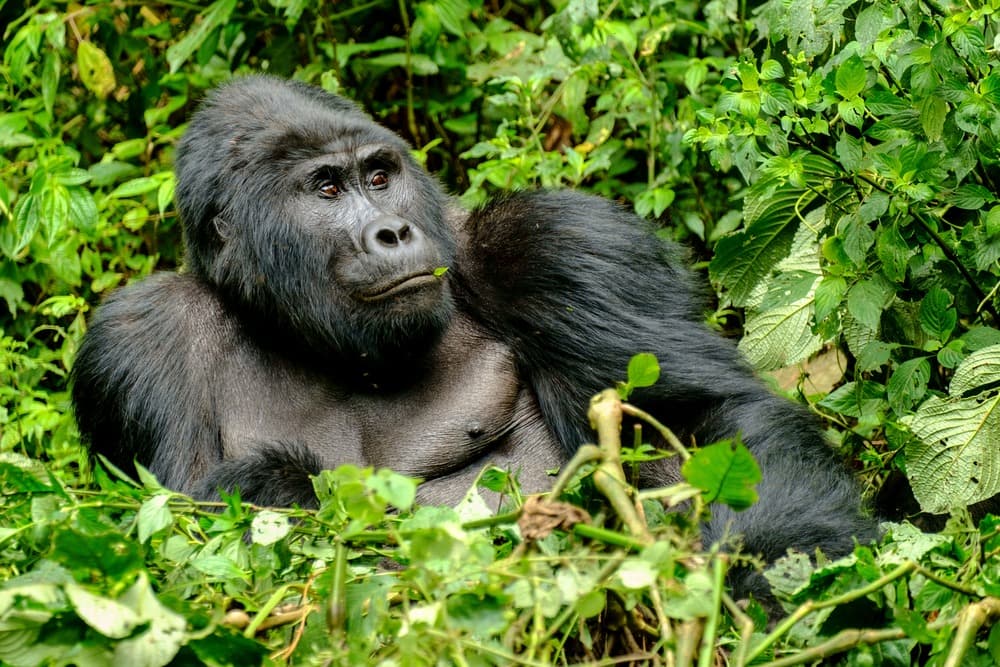
This site is globally recognized as the habitat of gorillas and monkeys, particularly the last remaining mountain gorillas. Its 32,100 hectares of verdant forests adorning the plains and mountains of the region create an idyllic escape. This corner of Uganda is perfect for venturing to encounter gorillas and immersing yourself in nature.
A brief history
Bwindi Impenetrable National Park was designated a national park in 1991 to protect the famous and rare endangered mountain gorilla species living within its bounds. Its reputation established this forest as among the world's premier gorilla trekking destinations. Later, around 1994, the site, thanks to its immense ecological biodiversity, was inscribed on the UNESCO World Heritage List.
Why visit Bwindi Impenetrable National Park?
- because Bwindi's impenetrable forest ranks among Africa's richest ecosystems. Indeed, it boasts the greatest diversity of tree and fern species in East Africa.
- Bwindi alone welcomes "half of the world's population of the last great mountain gorillas on record".
- Bwindi harbors 84% of Uganda's entire forest mountain butterfly species. The site is arguably Africa's most significant forest for these insects, hosting 202 species including 8 endemic to the Albertine Rift.
- because Bwindi's impenetrable forest is considered the densest, wildest, and most remarkable in Uganda.
- because Bwindi Impenetrable National Park lies close to Virunga National Park, expanding the range of tourist activities. Beyond hiking and trekking to discover Bwindi's gorillas, you can also visit dormant volcanoes and enjoy other thrilling activities.
Faunal richness
Bwindi Impenetrable National Park is renowned for sheltering numerous species threatened worldwide. Among them are large mammals such as the mountain gorilla, chimpanzee, L'Hoest's monkey, and African elephant. The site hosts 120 species of mammals: nearly 340 mountain gorillas, representing half the population of this endangered species. Several families of these animals roam here, but two groups are accustomed to human contact: the Mubare and Katendegyere, with the Mubare being the most sociable. The park is home to 35 known gorilla groups, though only 17 have been habituated for research and tourism.
347 bird species have been documented in the park. Among the 78 mountain forest bird species in the Albertine Rift region, 70 belong to Bwindi Impenetrable National Park. Of the 36 Rift endemic birds, 22 nest in the park. Chapin's flycatcher, Grauer's swamp warbler, Cryptospiza shelleyi, Eremomela turneri, and Grauer's broadbill are among the world's threatened bird species living in the park.
Bwindi's impenetrable forest is also a warm habitat for 220 butterfly species, including the African giant swallowtail and Papilio leucotaenia, threatened species.
Floral richness
With over 200 tree species, 10 of which are endemic, and some 104 fern species, Bwindi Impenetrable National Park ranks first in tree and fern diversity. It also hosts over 1,000 different flower species.
Top attractions to see at Bwindi
The most popular include: Kingha Coffee, Gorillas and Wildlife Safaris, Batwa Experience, and Nkuringo Safaris. As this is a national park, tourism activities take priority.
Best activities to do at Bwindi
Hiking, safaris, or trekking? You're spoiled for choice when discovering the natural wonders of Bwindi Impenetrable National Park by 4x4, quad, or all-terrain vehicle. Four trekking sectors are available for viewing mountain gorillas: Nkuringo, Buhoma, Rushaga, and Ruhija. You'll find two gorilla groups in the Nkuringo sector. For a gorilla habituation experience, choose Rushaga, where you might spend several hours with a gorilla family.
When to visit the park?
Favor the months of January, February, June, July, August, and December to visit Bwindi Impenetrable National Park. These are months with minimal rainfall, between 15 to 111 mm of precipitation. The forest climate prevails with an average temperature of 18°C, ranging from 11 to 23°C.
Practical information
If you're traveling from outside Uganda
You'll land at Entebbe International Airport, Uganda's primary international gateway, located approximately 35 km from the capital, Kampala. Reach Kampala by car in roughly 50 minutes. From there, you have several options to reach Bwindi Impenetrable Forest.
By car. This is the most common way from Kampala to Bwindi, covering 430 km of paved road (Masaka Route) in 7 to 8 hours.
By bus. You can also take a bus from Kampala to Butogota via Rukungiri and Kihiihi. Butogota is just 17 km from the Buhoma gate, the entrance to Bwindi Impenetrable National Park. To travel from Butogota to Bwindi, choose your preferred transport: a matatu or boda-boda.
By air. Bwindi is served by 3 airstrips: Kihiihi, Kayonza to the north, and Nyakabande to the south. From Entebbe or Kampala, you can take a flight to one of these airstrips (1.5 hours flight time). That said, the most straightforward way to reach the park is by road.
If you're already in Uganda
Beyond the 7 to 8-hour journey from Kampala, it's also possible to reach Bwindi Impenetrable National Park departing from Queen Elizabeth National Park to the north, just 2 to 3 hours away. To the south, you can reach Bwindi from the town of Kabale in just 1 to 2 hours. All three routes converge at Butogota, located 17 km from Bwindi Impenetrable National Park's entrance.
However, remember to reserve your park visit permit with the Uganda Wildlife Authority Service in Kampala.
Good to know
- Note that to preserve the tranquility of the gorilla families living in Bwindi Impenetrable National Park, access—particularly the number of daily visitors—is limited. It's therefore recommended to book your visit dates well in advance.
- During your hikes, treks, or safaris in Bwindi Impenetrable National Park to encounter mountain gorillas, keep your eyes open to spot the famous and impressive "silverback". A gorilla group or family typically consists of one large adult male leading it, usually the oldest, whose back is adorned with silvery-gray fur, hence their name "silverbacks". This recalls Kerchak, the magnificent gorilla leading the gorilla family that welcomed Tarzan. Then there are the younger black-backed males and a few females (five to six) and some young. Encountering a "silverback" during your escapade in Bwindi would be a truly remarkable discovery to immortalize with a stunning photograph. This animal is gigantic and can be aggressive, as it's the protector and leader of the group's members.
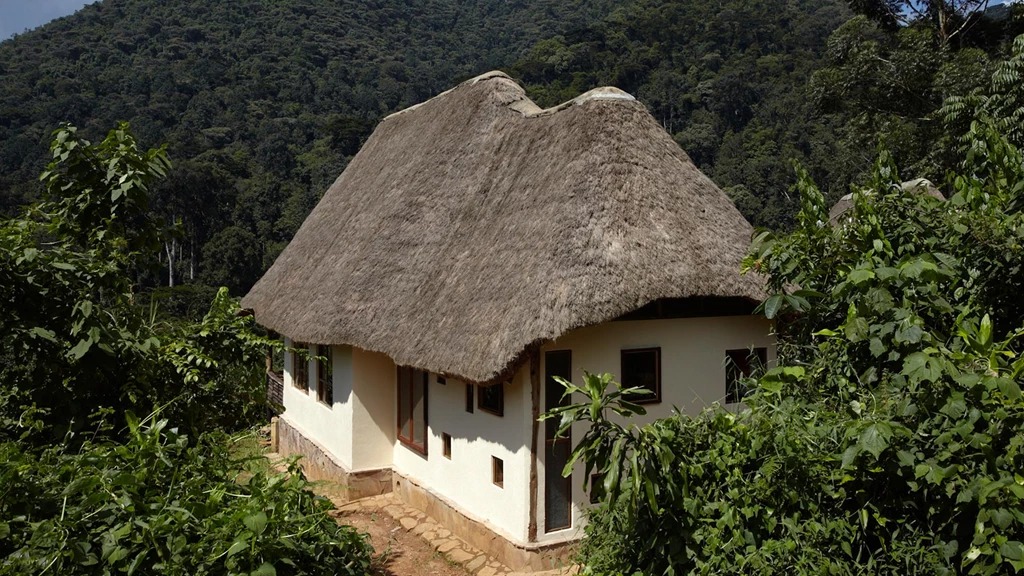
Accommodation in Bwindi Impenetrable National Park
Want to discover this destination?
Our local advisors design your tailor-made trip.