Lake Bunyonyi
Lake Bunyonyi
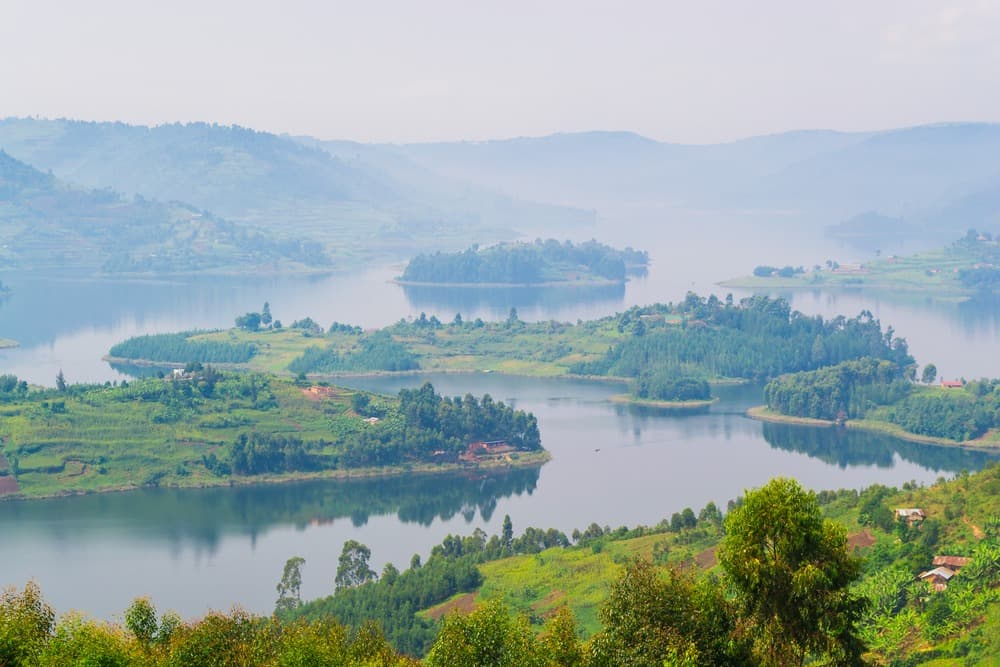
At 1,962 meters elevation, Lake Bunyonyi spreads its 29 islands between terraced hillsides and morning mist. Your complete guide to Uganda's 'little Switzerland.'
Experience an unforgettable getaway in this slice of paradise that is Lake Bunyonyi and its surroundings, wonderfully adorned with rich shades of green. "Must-see" seems almost an understatement to describe it, and it would be fair to say this tourist destination truly deserves a place among BuzzFeed's 'magical places to see before you die.' Discover why.
About Lake Bunyonyi
Located in southwestern Uganda, 7 km west of the town of Kabale near the Rwanda border, Lake Bunyonyi stretches magnificently across an area of 60 km². Beyond its freshwater expanse, it forms a wetland and marsh ecosystem three times larger. This sinuous lake measures 25 km long and 7 km wide. Scientific literature generally cites a maximum depth of 40 meters. However, local residents and tour guides estimate it to be considerably deeper—around 900 meters. If this estimate is accurate, Lake Bunyonyi would be Africa's 2nd deepest lake after Lake Tanganyika.
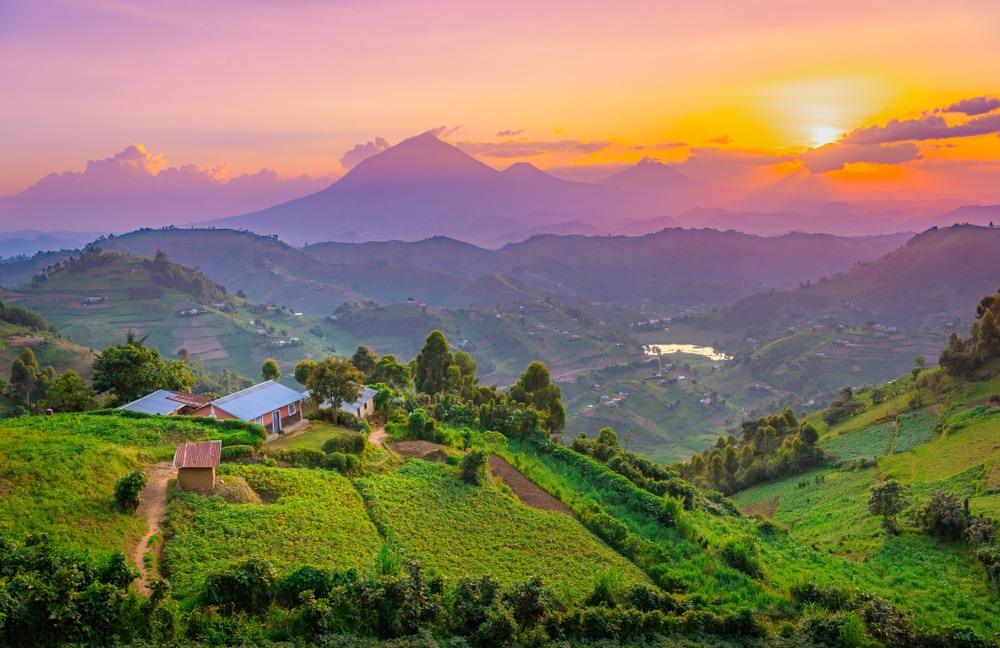
With its breathtaking natural setting combining verdant hillsides (ranging from 2,200 to 2,478 meters in elevation) marked by cultivated terraces and 29 magnificent islands rising from the water's surface, it offers a thoroughly delightful stop along the park circuit. Indeed, the beauty of its natural and idyllic landscape is enhanced by morning mist through which the small islands seem to drift. The place is equally captivating in the evening when the 29 islands floating on the lake are bathed in the warm glow of the sunset.
Principal Islands
Among Lake Bunyonyi's 29 islands, Akampene (the Island of Punishment), Bwama, and Njuyeera (Sharp Island) stand out. The first was where the Bakiga people once punished unmarried pregnant girls for bringing shame to their families and to discourage others from following the same path. The second, Bwama, is where English missionary Leonard Sharp established a leprosy treatment center in 1931. As for Njuyeera, it is where the same missionary built a church, established hospital beds, and created a medical center.
Lake Wildlife
The lake's waters are highly stratified, with the oxygen limit occurring at approximately 7 meters depth. Over 200 bird species nest in the surrounding hills, islands, and marshes. Notable inhabitants include the crowned crane, the nation's emblem, alongside numerous songbird species (weavers) and herons. It is precisely this wealth of avian species that gives the lake its current name: Bunyonyi, meaning 'the place of many birds'.
Historical Notes
Lake Bunyonyi formed 10,000 years ago during a volcanic eruption whose lava flow created a natural dam across the Ndego River. Despite fish introductions to the lake's waters in the 1930s, few species have thrived there. The scientific reasons remain unclear. Beyond tilapia, the only species present to this day is the African catfish, locally called "evale." In 2002, an attempt was made to reintroduce tilapia. For the pleasure of gourmands, the lake also abounds in small crayfish.
As an interesting aside, one of Lake Bunyonyi's islands, named Akampene, was historically a place of atonement for unmarried pregnant girls. In the early 20th century, in certain parts of Uganda before independence (among the Bakiga people), unmarried girls had to be virgins to marry and were exchanged for cattle. Unmarried pregnant girls brought shame to their families and were considered a loss of wealth. To wash away this "dishonor," the Bakiga would send these girls to Akampene to either starve or attempt swimming back to the village. A man without cattle to pay the bride price could visit the island and select a girl. The practice was abandoned in the first half of the 20th century.
Today, Lake Bunyonyi has become a true haven of peace and a retreat for nature lovers. Its natural beauty and serenity invite escape from the hustle and bustle of urban life.
Lake Bunyonyi: A Premier Destination in Uganda
Why Choose Lake Bunyonyi?
Lake Bunyonyi is a privileged stop for visitors to the region offering moments of relaxation following a trek with gorillas in the impenetrable Bwindi Forest, especially since its high-altitude climate provides refreshing respite.
From a tourism perspective, Lake Bunyonyi also boasts its natural landscape, combining a lake dotted with 29 magnificent islets and verdant surrounding hills, adorning Nature's canvas with beautiful shades of green. The setting is truly postcard-worthy. Indeed, from 2004 to 2009, the lake appeared on the 5,000 Ugandan shillings banknote under the title "Lake Bunyonyi and Terraces."
Lake Bunyonyi is considered the 2nd deepest lake in Africa and one of the country's greatest natural treasures.
Lake Bunyonyi ranks among Africa's rare lakes that are perfectly safe for swimming. It is free from dangerous wildlife such as hippopotamuses and crocodiles. However, inexperienced swimmers should still account for the lake's considerable depth.
What to See and Do at Lake Bunyonyi?
Breathtaking Views
The first "must-see" is the natural scenery offered by Lake Bunyonyi and its surroundings: verdant hills and 29 islands create a superb tableau with the water body. From one of the cottages at Arcadia Lodge, perched on a hillside, the views are nothing short of spectacular, with white clouds and mist adding to the drama.
Water Activities
Enjoy the crisp, crystalline waters of Lake Bunyonyi with swimming and bathing. The water is free from bilharzia, crocodiles, and hippopotamuses. The more adventurous can embark on a boat cruise or take a scenic boat ride across the lake. Some residents from neighboring villages cross the lake by canoe. You can join them to get closer to the islands and mingle with the local population, enriching your Uganda travel experience.
Practical Information
Climate
The region enjoys an equatorial climate tempered by its 1,962-meter altitude, providing moderate temperatures year-round (cool mornings and evenings). Lake Bunyonyi's waters are refreshing, with an average surface temperature of 25°C.
After landing in Kampala, Uganda's capital, you can directly rent a car to reach Lake Bunyonyi in 6 hours 50 minutes (460 km distance).
It is also possible to take a bus from Kampala to Kabale—a journey of approximately 6 hours 50 minutes. From Kabale, you can rent a car to reach Lake Bunyonyi in 1 hour 20 minutes. Another option is to depart from Kampala on a bus heading to Kyanika for a 4-hour journey. From Kyanika to Lake Bunyonyi, the drive takes 1 hour 25 minutes.
The journey to this Ugandan lake offers an idyllic landscape nicknamed Uganda's 'little Switzerland'.
Want to discover this destination?
Our local advisors design your tailor-made trip.