Ziwa Rhino Sanctuaries
Ziwa Rhino Sanctuaries
Uganda's sole white rhino sanctuary, Ziwa offers foot tracking between Kampala and Murchison Falls, within a protected 70 km² ranch.
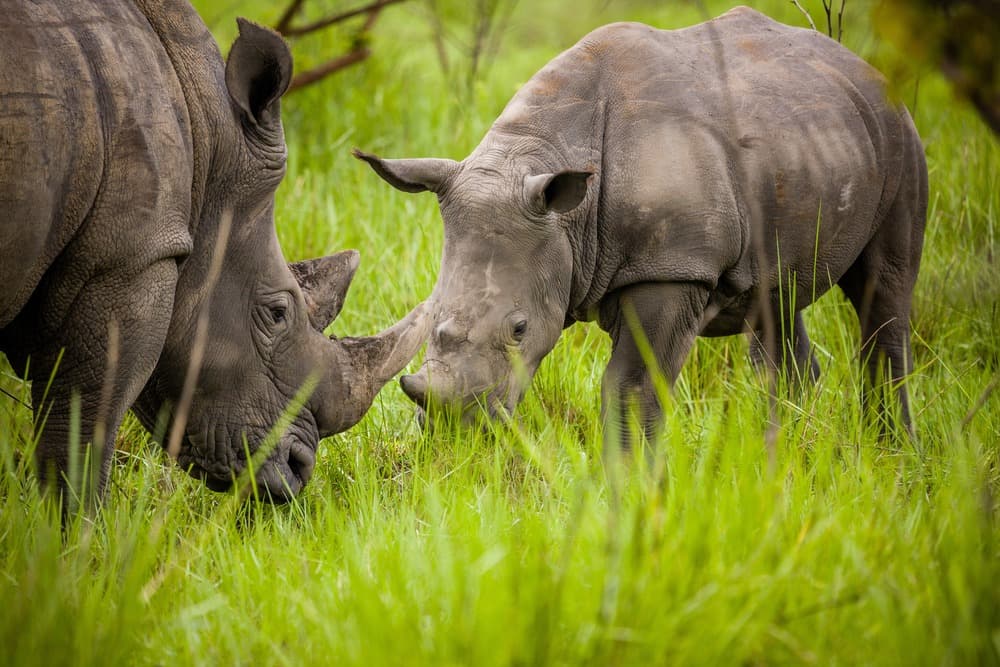
The Ziwa Rhino and Wildlife Ranch, commonly known as Ziwa Rhino Sanctuary, is today Uganda's only site where you can observe white rhinos in the wild. This private 70 km² ranch serves as a pilot program for reintroducing the species, which vanished from the country in the 1980s due to poaching and armed conflict. Situated midway between Kampala and Murchison Falls National Park, it makes a logical stop on the route to northern Uganda.
Why visit Ziwa
Ziwa is the only place in Uganda where you can approach a rhino on foot, accompanied by a trained ranger. The experience differs from a typical vehicle safari: a silent walk through savanna and acacia woodland allows you to observe animals at 6 to 7 meters, in a setting where conservation takes priority over mass tourism. The sanctuary is also home to over 300 bird species, including the rare Shoebill in the neighbouring Lugogo marshes.
A story of reintroduction
The sanctuary was created in 2005 by Rhino Fund Uganda and Uganda Wildlife Authority with a single objective: rebuild a population of Southern white rhinos (one of two subspecies, the other being the Northern white rhino, now nearly extinct).
The program began with six founder individuals: four purchased from Solio Ranch in Kenya, and two donated by Disney's Animal Kingdom in Florida. Births followed progressively: 13 individuals recorded in 2013, 22 in 2018, then 33 by the end of 2021. Figures reported since vary depending on sources, partly due to transfers and natural mortality; it is best to ask the ranch directly for the current population during your visit.
Security relies on substantial measures: more than 80 rangers patrol day and night, and a 2-meter electric fence encircles the entire 70 km² sanctuary.
What to see and do
Rhino tracking on foot
The ranch's flagship activity. Accompanied by a ranger, you follow rhino tracks through savanna, acacia forests and marshy zones. Depending on the animals' location that day, departure may be by vehicle before continuing on foot. Observation distance is maintained at 6-7 meters, sufficient for photography without disturbance. The best viewing windows are early and late day, when rhinos are most active. Bring closed shoes, long pants and plenty of water.
Lugogo Marsh and the Shoebill
Adjacent to the ranch, Lugogo Marsh can be explored by canoe. It is one of the few sites in Uganda where the Shoebill—this prehistoric-looking bird with its massive bill, which feeds on fish, young crocodiles and monitor lizards—can be observed with high probability. The outing is best at first light. Binoculars, cap and sunscreen are essential.
Birdwatching
Over 300 bird species have been recorded within the sanctuary. Four marked trails cross marshes, savanna and woodland, each providing access to different habitats. The wet seasons, richer in migrants, are particularly productive for birdlife.
Guided night walk
Led by a ranger, the night walk lasts between 1 and 3 hours and takes place in the evening, typically between 8 pm and 11 pm. It allows you to spot discrete species invisible by day: civets, galagos, nocturnal birds. Good fitness, a headlamp and insect repellent are necessary.
When to visit
The dry seasons, December to February and late June to October, remain the most comfortable periods: passable tracks, animals concentrated around waterholes, outings without cancellation risk. The rainy seasons (March-May and September-November) instead offer lush landscapes and strong birdwatching activity, at the cost of sometimes muddy tracks.
Practical information
- Advance booking is advised, especially in high season, through the ranch's official website or a local operator.
- Fees: moderate entry fee, foot tracking charged separately (budget higher for combined entry + tracking + shoebill outing). Rates are regularly reviewed, to confirm before departure.
- On-site accommodation: the ranch has a lodge and camping, allowing you to combine morning rhino tracking with a canoeing trip to Lugogo.
- Equipment: closed shoes, long pants, insect repellent, binoculars, water.
How to get there
The sanctuary is located approximately 175 km north of Kampala, roughly 2 to 3 hours' drive depending on traffic. The route follows the Gulu highway to the turning marked by the Nakitoma sign, from which a track leads to the ranch entrance. Most visitors stop here en route to Murchison Falls.
Nearby
Ziwa fits naturally into a north-western Uganda circuit. Travellers often combine a visit with Murchison Falls National Park, located about 2 hours further north. To extend the birdwatching experience around the Shoebill, Mabamba Swamps, closer to Kampala, offer another observation opportunity. Wetland lovers will also appreciate Bigodi Swamps in the west, or the shores of Lake Albert on the road to Murchison.
Frequently asked questions
Frequently asked questions
Include Ziwa in your journey
Ziwa fits naturally into an itinerary combining safari and birdwatching in Uganda. To build a bespoke circuit including the sanctuary, Murchison Falls and the country's other parks, consult our Uganda journeys.

Interested in this visit?
We can include it in your personalised itinerary.