Nkuruba Crater Lake
A small crater lake ringed by dense forest near Fort Portal, Nkuruba is a serene spot for observing black and white colobus monkeys and forest birds of western Uganda.
Nkuruba Crater Lake nestles within the dense vegetation of the Kabarole hills, just kilometres from Fort Portal. Formed in an ancient volcanic crater, this small circular lake is surrounded by riparian forest that shelters black and white colobus monkeys, cercopithecus primates and numerous forest birds. Its tranquillity and intact setting make it a cherished stop for travellers exploring western Uganda's crater lake region.
Quick facts at a glance
- Access: From Fort Portal, the site is reachable by motorcycle taxi (boda-boda) or private vehicle via the Kibale road.
- Suggested duration: A half-day is enough for the lake circuit and wildlife viewing.
- What to wear: Closed-toe shoes recommended for forest trails; long sleeves and trousers to protect against insects.
What you'll see
The lake itself is small and deep green, encircled by wooded walls that slope down to the water. The trail circling it winds through dense secondary forest. Black and white colobus monkeys (Colobus guereza) are frequently spotted in the overhanging trees. Ornithology enthusiasts can spot forest species that are difficult to see elsewhere in the region.
History and context
The Fort Portal region contains dozens of crater lakes, remnants of ancient volcanic activity. Nkuruba is one of the most accessible and best-preserved. A small community camp has developed on its shores, allowing local populations to benefit from tourism while ensuring the site's protection.
Highlights of your visit
The lakeside circuit walk
The circular trail hugs the shoreline and offers sweeping views of the water from the crater rim. The vegetation shifts with exposure, alternating between shaded zones and sunlit clearings.
Primate watching
Colobus monkeys are present year-round and sometimes approach within metres of visitors. Early morning offers the best viewing chances, before heat drives them to the high canopy.
Birdwatching
The riparian forest concentrates specialised forest species. A local guide familiar with bird calls significantly increases the number of species identified.
Photography tips
Morning light, before 9 a.m., is gentlest for photographing the lake from the crater heights. Colobus monkeys are excellent subjects for low-angle portraits from the trail. Avoid using flash near animals.
Location and access
Nkuruba lies in Kabarole District, a short distance from Fort Portal. Most visitors combine this site with Kibale National Park (chimpanzees) and other crater lakes in the region, notably Nyinambuga Crater Lake. A local guide is advised to navigate trails and maximise wildlife viewing.
Nearby
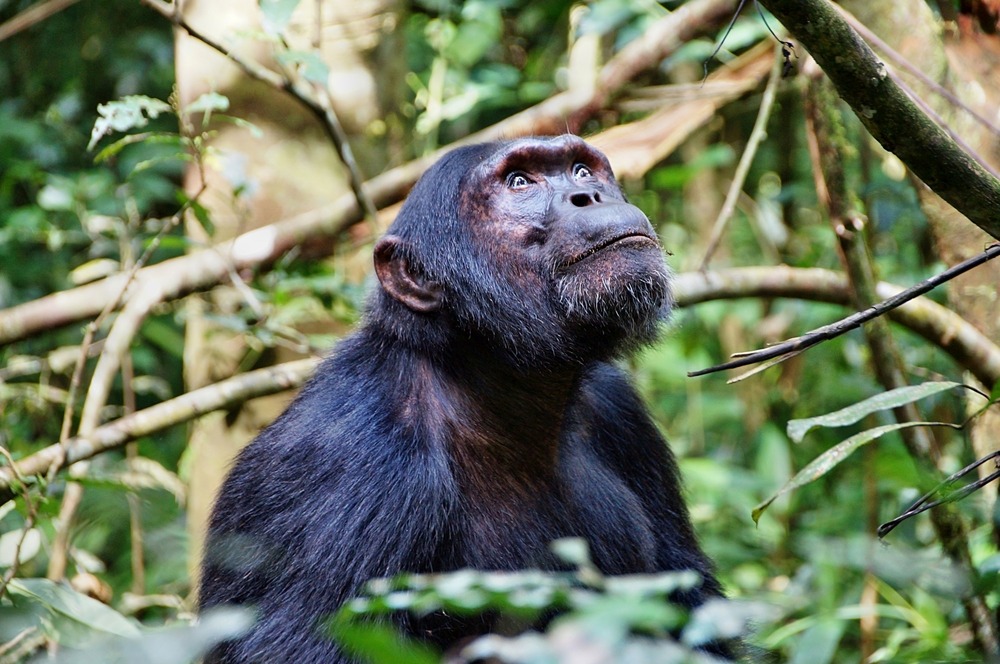
- Kibale National Park — East Africa's densest chimpanzee forest, less than an hour's drive away.
- Fort Portal — Convenient hub with bustling markets and varied accommodation.
- Rwenzori Mountains — A glaciated massif on the UNESCO World Heritage list, accessible from Fort Portal.
- Bwindi Impenetrable Forest — Mountain gorilla sanctuary, a few hours south.
Frequently asked questions
The dry seasons (June–August and December–February) make trails more passable and wildlife viewing easier. In the rainy season, vegetation is lusher but paths can be slippery.
Swimming is generally not advised in the region's crater lakes due to bilharzia risk. Check with the local camp before any immersion.
A local guide is not mandatory but highly recommended: they know the trails, facilitate spotting primates and birds, and support the site's community economy.
Yes, the two sites are close. A morning chimpanzee trek at Kibale followed by an afternoon visit to Nkuruba is a common itinerary for those based in Fort Portal.
A community camp offers simple bungalow accommodation on the lake shore. For greater comfort, Fort Portal offers a range of hotels nearby.
Interested in this visit?
We can include it in your personalised itinerary.