Bigodi Wetlands
Bigodi Wetlands
Community sanctuary at the edge of Kibale National Park: 200+ bird species, 8 primate species, and a Kitooro village to discover.
Bigodi Wetlands form a community ecocourism sanctuary located on the edge of Kibale National Park, in the highlands of southwestern Uganda, beneath the shadow of the Rwenzori Mountains. The site is renowned for its avian richness (over 200 species recorded), its eight primate species, and its management model by local residents.
Why visit Bigodi Wetlands
Bigodi stands out for three complementary strengths. First, concentrated biodiversity over a short route: the great blue turaco, the sanctuary's flagship species, is easily observable here, accompanied by primates and semi-aquatic mammals. Second, exemplary local management led by KAFRED, which reinvests revenues into community projects. Finally, the accessibility of the wetland (less than 5 km of walking) makes it a perfect complement to chimpanzee trekking at Kibale, without requiring great physical fitness.
History of the sanctuary
The wetland was once called Magombe, meaning "cemetery" in the local language, in memory of the many people who lost their lives during the construction of a bridge in the area. The current term Bigodi comes from the Rutooro word Kugodya, translatable as "to walk exhausted": travelers heading to Kibale Forest would exhaust themselves crossing these marshy lands and had to stop there regularly.
The Kibale Association for Rural and Environmental Development (KAFRED) was founded in 1992 to structure sustainable tourism in the region. Under its initiative, the site received, in the 1990s, its current designation of Bigodi Wetlands Sanctuary. The association today coordinates guided visits, village outings, and funding for local development projects (schools, healthcare, microfinance).
What to see and do at Bigodi
Bird watching
The wetland hosts more than 200 bird species. The marked trail is approximately 5 km and can be covered in 3 hours, allowing you to observe around forty species depending on the season and your luck on the day. The flagship species remains the great blue turaco, but guides also seek out the crowned crane (Uganda's national emblem), the pygmy honeyguide, the thick-billed honeyguide, the papyrus gonolek, Nahan's francolin, and the crowned eagle. A pair of binoculars is essential.
Primates and other mammals
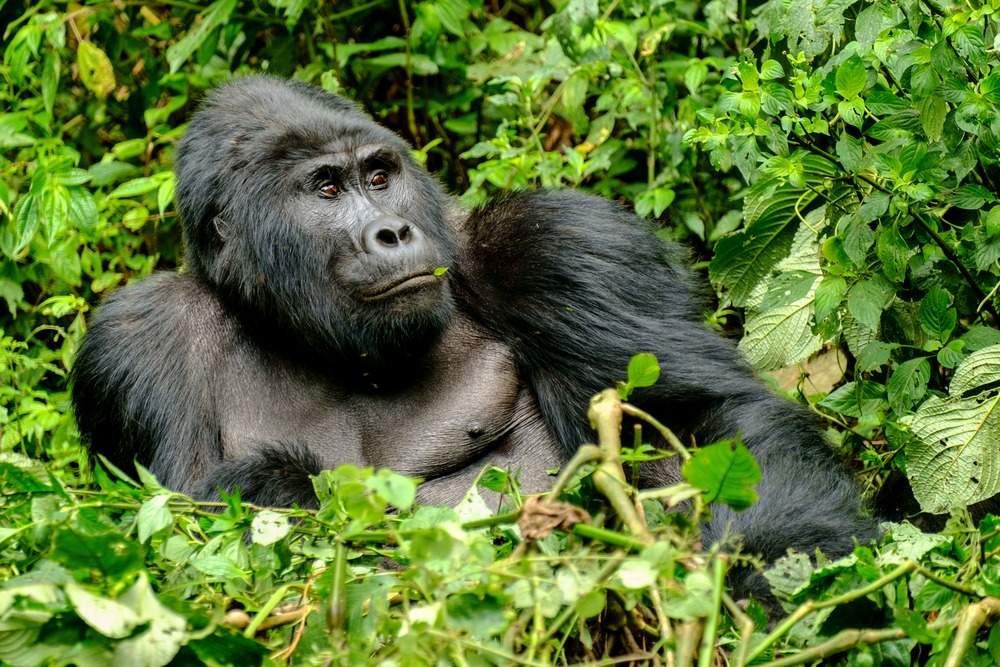
Eight primate species frequent the sanctuary:
- olive baboon
- red-tailed monkey
- blue monkey
- Hoest's monkey
- vervet monkey
- red colobus
- black-and-white colobus
- grey-cheeked mangabey
The wetlands are also home to bushbucks, sitatungas (antelopes adapted to wetlands), and otters. A platform in the canopy, accessible during the circuit, offers an open view over the wetland and facilitates observation at tree height.
Cultural village visit
KAFRED offers a 3 to 4-hour circuit through the village to explore the traditional Kitooro way of life. The program includes a meeting with a healer discussing medicinal plants, conversations with elders, and a visit to the Bigodi Cultural Center. This small museum brings together grinding stones, mortars, storage containers for banana beer and gin, traditional instruments, and distillation equipment.
Local craftsmanship is also worth exploring: mats, baskets, bags, and jewelry are made from banana fibers, millet straw, Phoenix palm leaves, raphia, and natural dyes. Purchases made on-site directly support village craftswomen.
When to visit
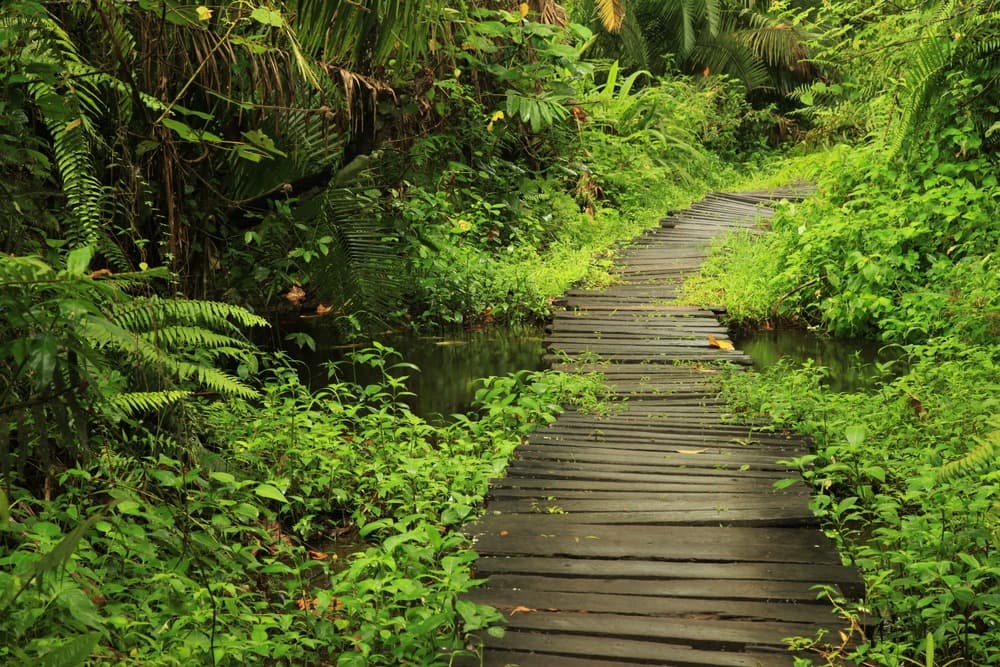
Bigodi can be visited year-round, but the dry seasons (December to February and June to August) make walking on wooden walkways easier and limit humidity. The rainy seasons, while muddier, are favorable for observing certain migratory bird species.
As for timing, the best observation windows are early morning (around 7:30–9 a.m.) and late afternoon (after 3 p.m.), when birds and primates are most active. Avoid midday, which is not conducive to wildlife activity.
Practical information
- Duration of visit: allow 3 hours for the bird trail, an additional 3 to 4 hours for the village tour.
- Fees: entrance fee for foreign tourists, moderate rate, additional fee for the cultural tour. Funds return to the community via KAFRED.
- Equipment: closed-toe shoes, binoculars, insect repellent, water, long clothing.
- Field tip: tuck your pants into your socks to protect yourself from red ants. Boots can be rented at the association's office.
- Guides: visits must be made with a KAFRED guide, trained in species identification. Alert the guide in advance if there are any particular species you wish to prioritize.
How to get there
Bigodi is approximately 40 km from Fort Portal, at the edge of Kibale National Park, on the road connecting Fort Portal to Kamwenge district. From Kampala, allow approximately 6 hours of driving. Most visitors combine Bigodi with chimpanzee trekking at Kibale, with the park entrance just a few kilometers away. A private vehicle with driver remains the most practical solution given the distance.
What to see in the region
- Mabamba Wetlands — another major birdwatching site in the country, renowned for the shoebill, to combine if Kampala is on your itinerary.
- Lake Albert — to the northwest, another highlight for wildlife and Rift Valley landscapes.
- Ziwa Rhino Sanctuary — a classic stop on the route to Murchison Falls.
- Entebbe Botanical Gardens — convenient at the start or end of your trip, near the airport.
Frequently asked questions
Frequently asked questions
Include Bigodi in your trip
Bigodi Wetlands fit naturally into an itinerary combining Kibale, the Rwenzori, and southwestern parks. To build a custom tour including this sanctuary and chimpanzee trekking, explore our Uganda travels.
Interested in this visit?
We can include it in your personalised itinerary.