Lake Albert
Lake Albert
Shared between Uganda and the DRC, Lake Albert is the northernmost lake of the Western Rift Valley. Practical guide: wildlife, activities, access and seasons.
The Lake Albert marks the northern end of the Western Rift Valley lake chain, on the border between Uganda and the Democratic Republic of the Congo. Africa's seventh-largest lake by surface area and Uganda's second-largest of the Great Lakes, it stretches across 5,300 km² and serves as a natural stopping point on the route to Murchison Falls, in the country's northeast.
Why visit Lake Albert
Lake Albert stands apart for several characteristics rarely found together. Shared between Uganda (46%) and the DRC (54%), it is the northernmost lake in the Western Rift Valley, sitting at an elevation of 615 metres. It measures 160 km in length and 30 km in width, with depths ranging between 25 and 60 metres.
It is also a premier fishing destination in East Africa: the lake ranks second only to Lake Victoria in Uganda's fish yield, with an estimated annual production of around 172,000 tonnes—nearly 30% of the nation's total output. This industry sustains approximately 15,420 fishermen in Uganda and roughly 20,000 on the Congolese side.
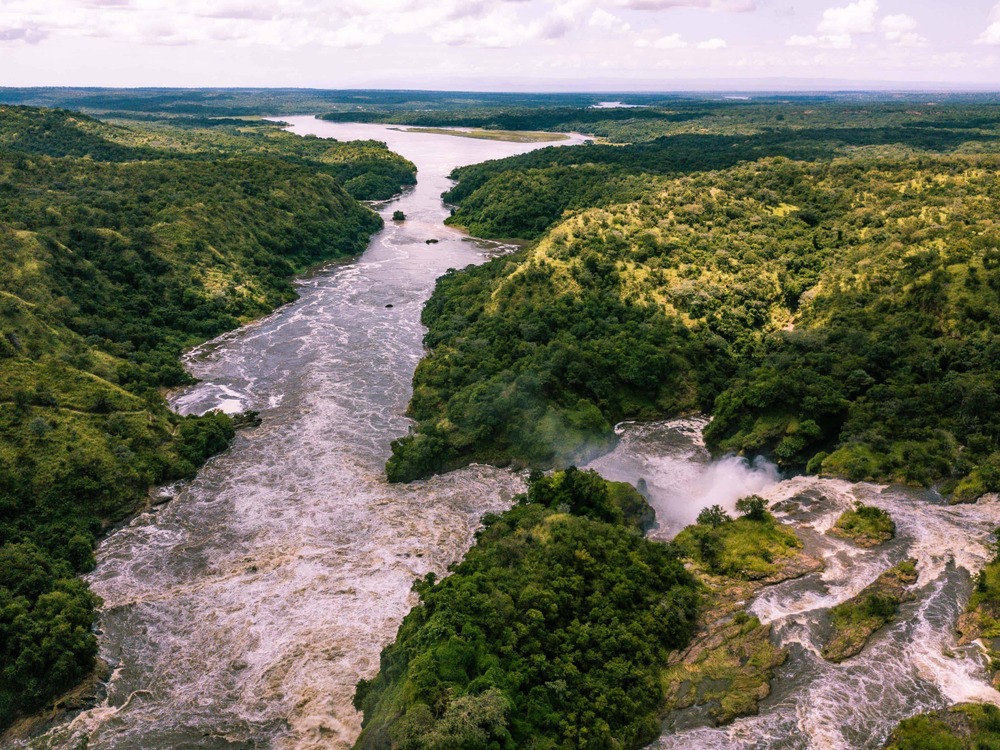
Furthermore, the basin is home to remarkable aquatic and semi-aquatic wildlife, including an endemic species listed on the IUCN Red List, and offers a striking landscape defined by forested cliffs that dominate its eastern and western shorelines.
History and nomenclature
The lake is believed to have formed 10 to 12 million years ago during the collapse of the East African Rift. The Banyoro and Batooro peoples long called it Mwitanzige, literally "locust killer," in reference to an oral tradition describing swarms of insects perishing as they attempted to cross the body of water.
In 1864, British explorer Samuel Baker reached its shores and named it Lake Albert in honour of Albert of Saxe-Coburg-Gotha, husband of Queen Victoria, who had died shortly before. The lake was also known as Lake Mobutu Sese Seko during the Zairian regime, and is sometimes referred to as Albert Nyanza.
In 2006, the companies Heritage Oil and Tullow Oil announced the discovery of petroleum in the basin. According to estimates relayed by Oil of DRCongo (Fleurette group), reserves are estimated at 3 billion barrels, making it one of the most significant onshore oil discoveries in sub-Saharan Africa in the past two decades. The fishing fleet, meanwhile, grew from 760 vessels in 1960 to approximately 6,000 by 2011, reflecting mounting pressure on the resource.
What to see and do at Lake Albert
The basin's wildlife
The lake is home to between 40 and 55 fish species, including several cichlids and the endemic Lates macrophthalmus (Albert Lates), listed on the IUCN Red List. Pelagic species dominate catches: Neobola bredoi accounts for roughly half the total catch, followed by Brycinus nurse, Nile perch (Lates spp.), tiger fish Hydrocynus forskalii, and Nile tilapia Oreochromis niloticus.
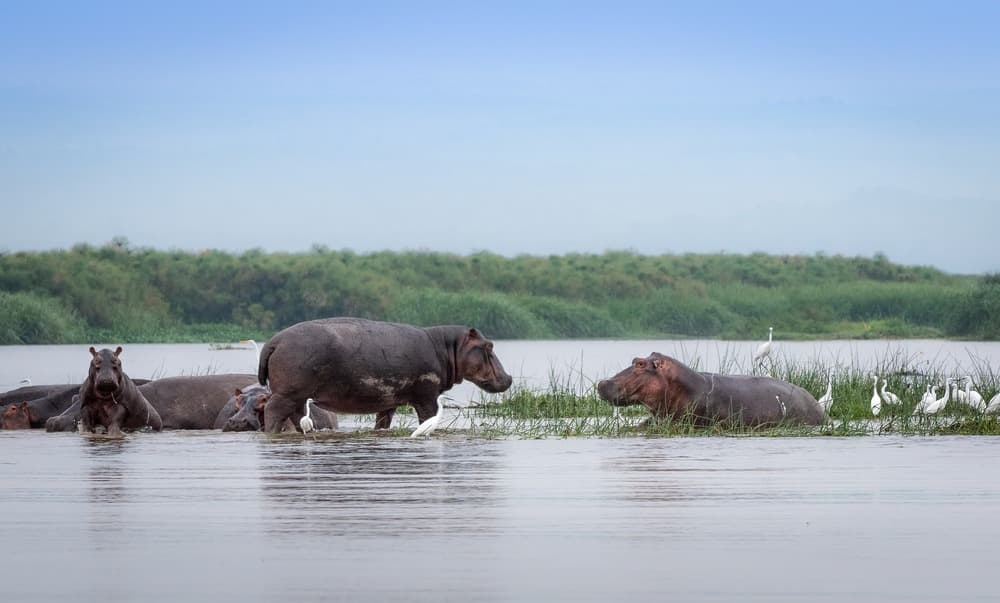
Along the shorelines and in wetland areas, you will find Nile crocodiles, monitor lizards, African tortoises, Uganda kob, and several species of semi-aquatic snakes and frogs. For birdwatchers, pelicans, herons, and especially the rare shoebill are among the most sought-after sightings.
Activities on site
- Boat trips or cruises on the lake from the Ugandan shores
- Visit to a fishing village, particularly around Butiaba or Pakwach
- Daytime or night safari in the Kabwoya Wildlife Reserve
- Bush dinner organized by certain lodges in the reserve
- Bird watching along marshes and river mouths
When to visit
Climate varies considerably with altitude. Rainfall ranges from 600 mm annually at the rift floor to 2,000 mm on surrounding highlands. Water temperature remains stable at around 27 to 29 °C, with a pH of 8 to 9.
The dry seasons (December to February and June to August) are most favourable: tracks are passable, wildlife viewing is easier, and boat outings are more comfortable. The wet transition seasons, by contrast, offer greener landscapes and better birdwatching opportunities.
Practical information
- Duration of visit: plan for a half-day for a boat excursion, or two to three days if combining with Kabwoya Reserve
- Rates: boat excursions and activities in reserves are booked locally, at moderate to high rates depending on the format
- Accommodation: several lodges and camps along the Ugandan shoreline, mainly in the Kabwoya area and near Butiaba
- Essentials to bring: sunscreen, insect repellent, binoculars, neutral-coloured clothing for safari
How to get there
From Kampala, allow a full day of travel (approximately 300 km) to reach the lake's southeastern shores via Hoima, the region's principal urban centre. The track then descends toward Kabwoya or Butiaba through the rift escarpment. From Murchison Falls Park, access is via Pakwach on the northeastern shore, where the Nile exits the lake.
A 4x4 vehicle is recommended, particularly during the rainy season. Local tour operators often include Lake Albert in circuits combining Murchison Falls and the Hoima region.
What to see in the region
- Ziwa Rhino Sanctuary — classic stopover on the route between Kampala and Murchison
- Mabamba Wetland — premier site for observing the shoebill
- Bigodi Wetland — birding trek near Kibale
- Entebbe Botanic Gardens — naturalist stop near the airport
Frequently asked questions
Frequently asked questions
Lake Albert spans the border between Uganda (46% of the surface area) and the Democratic Republic of the Congo (54%). It occupies the northern end of the Western Rift Valley, at an elevation of 615 m.
Before its discovery by Samuel Baker in 1864, the Banyoro and Batooro peoples called it Mwitanzige ("locust killer"). Baker renamed it in honour of Prince Albert, husband of Queen Victoria. It has also been called Lake Mobutu Sese Seko and Albert Nyanza.
Yes, Kabwoya Wildlife Reserve on the southeastern Ugandan shore offers daytime and night safaris as well as guided bush outings in a setting less frequented than the major national parks.
The dry seasons, from December to February and June to August, provide the best travel and viewing conditions. The wet transition seasons are more favourable for birdwatching but make tracks more difficult.
Yes, it is actually a common itinerary. Lake Albert makes a natural stopping point before or after Murchison Falls Park, located immediately to the northeast, where the Nile exits the lake at Pakwach.
Plan your trip
Lake Albert fits naturally into a northwestern Uganda circuit, combining wildlife viewing, rift landscapes, and discovery of fishing communities. To build a bespoke itinerary, consult our Uganda travel experiences.
Interested in this visit?
We can include it in your personalised itinerary.